Set up a card station

Ten minutes of setting up saves an hour of hunting for glue. Cover the table with newspaper or an old cloth and put out:
- Folded card, A5 or A6. Plain white or coloured card from a craft shop is cheap in packs of 50.
- Glue sticks rather than runny glue, and a damp cloth for fingers.
- Felt tips, crayons and a few metallic pens for the finishing touches.
- Scraps: last year's cards, wrapping paper, ribbon, buttons, cotton wool, tissue paper.
- A tray for anything with glitter, so it stays in one place.
Designs by age
Ages 3 to 4
- Fingerprint fairy lights. You draw a wiggly black line across the card. They press coloured fingerprints along it for bulbs.
- Handprint reindeer. A brown handprint upside down: the fingers are antlers, the palm is the face. Add a red nose sticker and two googly eyes.
- Triangle tree. You cut green paper triangles; they stick them in a stack and add a star sticker on top.
- Cotton wool snowman. Two circles drawn in pencil, filled with stuck-on cotton wool.
Ages 5 to 6
- Button snowman. Three white paper circles, real buttons glued down the front, a scrap of fabric for a scarf.
- Wrapping-paper bauble. Draw round a cup on old wrapping paper, cut it out, glue it on and draw a string to the top of the card.
- Glitter star. Draw a star in glue, shake glitter over it in the tray, tip off the rest.
- Thumbprint robin. A brown thumbprint with a red patch at the front, a tiny beak and two legs drawn on.
Ages 7 to 8
- Pop-up card. Make two short cuts into the fold, push the tab inside and stick a drawing of a present or a tree onto the tab.
- Washi tape tree. Strips of patterned tape, longest at the bottom, shortest at the top, trimmed at the edges.
- Stitched star. Prick holes in a star shape with a pin (grown-up first), then sew through with wool and a plastic needle.
Ages 9 to 10
- A drawn scene. A pen drawing of your street in the snow, coloured in pencil.
- Paper-cut snowflake glued onto dark blue card, so the pattern shows.
- A comic strip of the family's Christmas morning, four panels across the front.
- Hand lettering. "Merry Christmas" in bubble letters or a fancy script, practised on scrap paper first.
Making a whole batch
If they want to send twenty cards, turn it into a little factory.
- Potato printing. Cut a potato in half and carve a star, tree or bauble into the flat side (a grown-up job). Dab on paint and print. They print; you keep the paint topped up.
- Sponge trees. A kitchen sponge cut into a triangle makes a tree in one press. A small square of sponge makes the trunk.
- One job at a time. Fold all the card first, then print every front, then add stars to every tree, then write inside. It goes faster and looks more even.
- Dry them flat overnight on newspaper before writing inside, so the ink does not smudge.
What to write inside
This is where most children stall. A few prompts help.
- Ages 3 to 5: they write their name, or a kiss, or draw a tiny picture. You write the message.
- Ages 6 to 8: one line about the person: "Thank you for teaching me to swim," "I like your dog," "See you at Christmas."
- Ages 9 to 10: a short note with one memory from the year, a question for them, and a joke if they like.
- Write the year and the child's age on the back. Grandparents keep them.

Bright Eyed Kid
A storybook where they star on every page
Written from scratch around your child, with the people and things they love.
Who to make one for
- Grandparents and anyone far away, who see the child least.
- Their teacher, teaching assistant and the school office.
- A neighbour who lives on their own.
- The lollipop person, the postie, the bin crew.
- One for your own box, to keep every year.
Sending them
- Check Royal Mail's last posting dates for Christmas, especially for anyone abroad.
- Let them write the address and stick on the stamp. It is part of the fun.
- Hand-deliver local ones on a walk, posted through letterboxes.
Small budget ideas
- Cut up last year's cards. The pictures make new card fronts and the plain backs make gift tags.
- Cereal box card works for printing, painted white first.
- Potato and sponge printing costs almost nothing.
- Photograph the best design and print it at home on plain card if they want to send more than they can make by hand.
- Use envelopes from cards you received, turned inside out and glued.
Card-making is a good afternoon among the other Christmas activities for kids, and pairs well with Christmas crafts.
Why a book where they star suits a card-making Christmas
A home-made card says the child put themselves into it. A Christmas book where they star does the same in story form, for the people who treasure their cards most.
In a Bright Eyed Kid book your child looks like themselves on every page. Add your own story idea, such as the year they made a card for everyone on the street, and the book is written around it. A grandparent or sibling can have a part as a co-star, with a photo and a name. It pairs well with a home-made card: one to stand on the mantelpiece, one to read together.
What it costs

A digital book is £8.49 and a printed hardback is £29.99, plus £2.95 delivery. Every book is 32 pages.
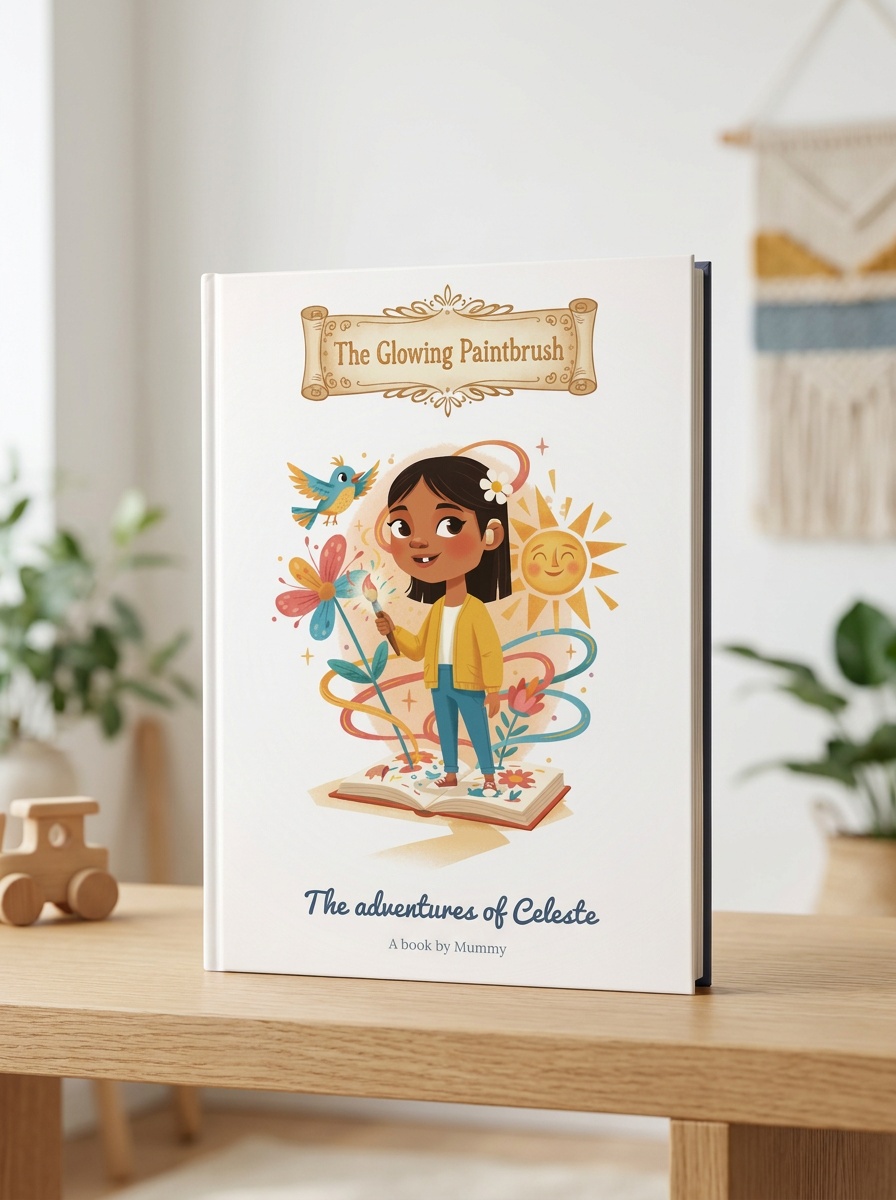
Make a book they will ask for every night
- A new story, written from scratch around them
- Their family, pets and favourite things inside
- Read a free story outline before you pay
- Change any words or pictures until it feels right
32 pages · digital £8.49 · hardback £29.99
An example book. Every title, cover and story is made for one child.
Questions parents ask
What Christmas cards can a 3 year old make?
Fingerprint fairy lights, a handprint reindeer, a tree of stuck-on paper triangles or a cotton wool snowman. You write inside; they add their name or a kiss.
How can kids make lots of Christmas cards quickly?
Print a star or tree with a cut potato or a sponge, fold all the card first, and do one job at a time like a little factory.
What should a child write in a Christmas card?
One line about the person, such as a thank-you or a memory from the year. Younger children can just write their name or a kiss.
How do you stop card-making getting too messy?
Cover the table, use glue sticks instead of runny glue, keep glitter on a tray, and have a damp cloth ready for fingers.
Can grandparents have a part in a Bright Eyed Kid book?
Yes. Your child stars on every page, and grandparents can be co-stars with a photo and a name.