Before you start

- Pick a time with no clock ticking. A wet Saturday afternoon beats twenty minutes before tea.
- Read the recipe through first, on your own, so you know which steps are theirs.
- Weigh everything into bowls first. Then the children do the tipping and stirring, and nothing gets lost.
- Take butter and eggs out early. Soft butter is much easier for small arms to cream.
- Aprons on, sleeves up, hands washed, long hair tied back.
- Put a stool at the counter so they can see into the bowl, and stay beside it.
Jobs by age
- Ages 3 to 4: tipping in what you weighed, stirring, cracking an egg into a cup first (fish out the shell after), cutting shapes, pressing on sprinkles, spooning mixture into cases.
- Ages 5 to 6: spooning flour onto the scales, rubbing butter into flour, rolling dough, lining a tray, counting out cases, washing up the bowls.
- Ages 7 to 8: reading the recipe out, weighing on their own, cracking eggs straight in, using a hand whisk, setting the timer, piping icing.
- Ages 9 to 10: running a simple recipe start to finish with you nearby, doubling a recipe, choosing their own decoration. The oven, sharp knives and hot trays stay a grown-up job until you decide otherwise.
Forgiving first bakes
- Chocolate crispy cakes: no oven, and melting the chocolate is the grown-up's part.
- Flapjacks: one pan, one tray, hard to get wrong.
- Fairy cakes: each child decorates their own, so there is no arguing.
- Scones: rubbing in is perfect for small hands, and cutting the rounds is satisfying.
- Gingerbread people: rolling, cutting and decorating, the best bit.
- Pizza muffins: for when something savoury is wanted.
- Banana bread: mashing the bananas is a perfect job for a three year old.
A recipe they can remember
A classic sponge uses equal weights of butter, caster sugar and self-raising flour, with roughly one egg for every 50 to 55g of each. So 110g each of butter, sugar and flour with two eggs makes about twelve fairy cakes. Cream the butter and sugar, beat in the eggs one at a time, fold in the flour, and bake at around 180°C (160°C fan) for roughly 15 to 18 minutes, until springy. Check your oven: they vary.
Once a child knows the 'all the same weight' rule, they can make cakes without a book, and that is a proud moment.
Learning without noticing
- Maths: reading scales, counting cases, halving a recipe, telling time on the timer.
- Science: why cakes rise, why chocolate melts and sets, why dough springs back.
- Reading: following steps in order, learning words like fold, cream and rub in.
- Patience: waiting for things to cool before icing is a life skill.
Keeping it calm
- One bowl per child if there are two. Nobody shares a wooden spoon.
- Give each child a named job before you start: chief stirrer, egg cracker, timer keeper.
- Expect mess. Put newspaper or a tray under the bowl. Wipe up together at the end: it is part of the job.
- No licking the bowl of anything uncooked. Raw egg and raw flour can both carry germs. Save a little icing for licking instead.
- Check for allergies before baking for anyone else.

Bright Eyed Kid
A storybook where they star on every page
Written from scratch around your child, with the people and things they love.
When it goes wrong
It will, sometimes, and that is fine. Treat it as part of the fun rather than a disaster.
- Cakes sank in the middle? Fill the dip with icing and call them volcano cakes.
- Biscuits spread into one big biscuit? Cut it into squares while warm.
- Burnt edges? Trim them off and talk about why: the oven was too hot, or the timer was missed.
- Too much mess, too little patience? Stop, put the kettle on, and finish another day.
A bake that went wrong and still got eaten teaches more than a perfect one you did yourself.
Savoury bakes for small hands
- Cheese straws: ready-rolled pastry, grated cheese, twist and bake.
- Soda bread: no yeast, no waiting, lots of squishing.
- Pitta pizzas: they choose the toppings, you do the oven.
Baking through the year
- Pancake Day: a thin batter they can whisk, with toppings to choose.
- Easter: chocolate nests with mini eggs.
- Summer: fruit scones for a picnic.
- Halloween: spider biscuits and pumpkin muffins.
- Christmas: mince pies with star lids, and a gingerbread house. Our guide to gingerbread house ideas helps.
Turn a bake into a present
- Biscuits in a jar with a label they drew, for a teacher or a grandparent.
- A plate of something for the neighbours at Christmas.
- Gingerbread tree decorations, with a hole made with a straw before baking.
- A family recipe written out in their handwriting, to keep.
Why a book where they run the bakery fits
Children who love baking love being in charge of it. A story where they star as the baker, the cake inventor or the one who saves the village fete takes that pride somewhere new. It works especially well for a child who bakes with a grandparent, because the grandparent can be in the story too.
A Bright Eyed Kid book is written around your child. Add your own story idea, such as the day they baked a cake so big the whole town came, and up to five co-stars, such as a grandparent, a sibling or the dog waiting for crumbs. You see a free outline before paying and can change it until it feels right. On a rainy day, pair a bake with ideas from rainy day activities for kids.
What it costs

A digital book is £8.49 and a printed hardback is £29.99, plus £2.95 delivery. Every book is 32 pages.
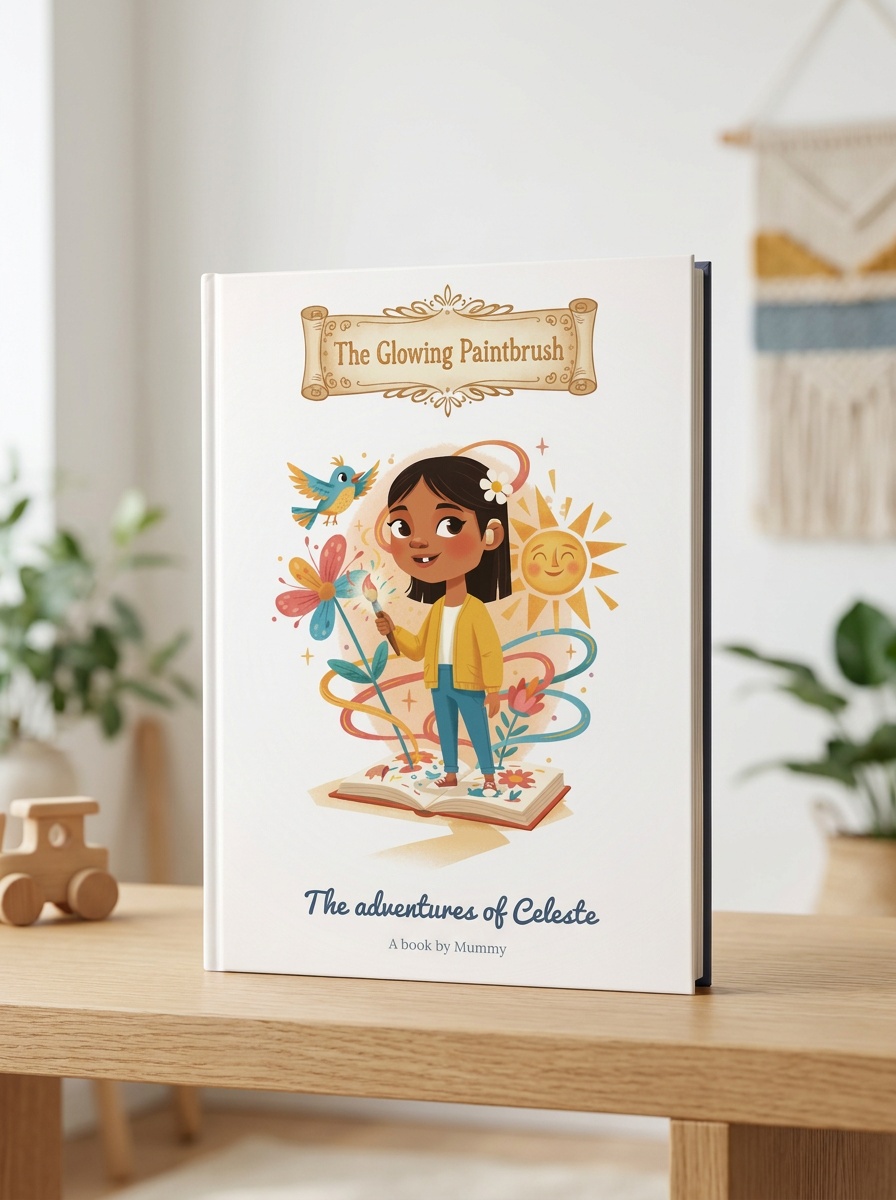
Make a book they will ask for every night
- A new story, written from scratch around them
- Their family, pets and favourite things inside
- Read a free story outline before you pay
- Change any words or pictures until it feels right
32 pages · digital £8.49 · hardback £29.99
An example book. Every title, cover and story is made for one child.
Questions parents ask
What can a 3 year old do when baking?
Tip in ingredients you have weighed, stir, cut shapes, spoon mixture into cases and add sprinkles. Cracking an egg into a cup first is a good job too.
What is the easiest thing to bake with kids?
Chocolate crispy cakes need no oven. Flapjacks, fairy cakes and banana bread are forgiving first bakes with an oven.
Is it safe for kids to lick the cake bowl?
It is best not to with uncooked mixture, because raw flour and raw egg can carry germs. Save a spoonful of icing for licking instead.
At what age can kids bake on their own?
Around 9 or 10 many can follow a simple recipe with a grown-up nearby. The oven and hot trays stay a grown-up job until you decide otherwise.
How do I bake with two children without arguments?
Give each a bowl and a named job, and choose bakes where each child decorates their own, such as fairy cakes or biscuits.
Can a Bright Eyed Kid book be about baking?
Yes. Add your own story idea and the book is written around it, with your child starring on every page.