Start with the words
A card in a child's own hand is the gift many teachers keep for years. The more specific it is, the better. "Thank you for helping me with my times tables" means more than "best teacher ever".
Help your child think of one thing they will remember:
- Something the teacher taught them to do
- A day that was fun: a trip, a play, a science lesson that went bang
- A time the teacher helped when they were worried
- Something funny that happened in class
What your child can do, by school year
- Nursery and Reception: a drawing. A picture of the teacher, the classroom or themselves at school. You write their words underneath exactly as they say them.
- Years 1 and 2: a few words of their own. One or two sentences in their writing, spelling and all, plus a drawing. Teachers love seeing how far the writing has come.
- Years 3 and 4: a short letter. Three things they liked about the year. Give them nice card or paper and let them do it without you correcting it.
- Years 5 and 6: something personal. A proper letter, a poem, or a "top ten moments of the year" list. Leaving primary school is a big goodbye, so this is the year to make it count.
Small gifts that get used
If you want to add something, keep it small. A card on its own is plenty, and many families spend no more than £5 to £10.
- Good pens or a notebook. Teachers get through both, and a nice one is a treat.
- A plant or seeds. Something for the classroom windowsill or their garden.
- Something homemade to eat. Biscuits or fudge in a jar, made with your child, with a label they wrote. Check the school's food rules first.
- A book for the class. A picture book or a class read-aloud, with your child's name written inside as the giver. It stays in school for years.
- A hot drink kit. A mug your child decorated with a ceramic pen, and a few tea bags or hot chocolate sachets.
Teachers often say they have plenty of "best teacher" mugs, candles and anything apple-shaped. A card beats all of them.
A whole-class collection
Many classes pool money through a parents' group chat or a class rep. It works well because it is fair to every family and the teacher gets one useful thing instead of thirty small ones.
- Keep it optional and anonymous. Suggest a small amount, say "any amount or none", and never list who gave what.
- Choose something flexible. A voucher for a bookshop, garden centre or local café.
- Add the children's words. A big card or a scrapbook where every child writes or draws one line. This is the part the teacher will keep.

Bright Eyed Kid
A storybook where they star on every page
Written from scratch around your child, with the people and things they love.
Christmas or the end of the year?
- Christmas: a card, and something tiny if you like. The class is together for months more, so keep it light.
- End of the school year in July: the bigger thank-you, especially when your child moves class or leaves primary school. This is when a letter or a class collection fits best.
Both are optional. A card at either time is enough.
Thank the whole team
A school day has many people in it. A short note from your child means a lot to:
- Teaching assistants, who often know your child best
- Lunchtime staff and the school cook
- The office staff who sort out lost coats and forgotten lunches
- Club leaders, the caretaker and the crossing patrol
Help your child make a batch of small cards at once: one sheet of card, folded and cut, a drawing on each.
A keepsake of the year for your child
The end of a school year is worth keeping for your child too. A Bright Eyed Kid book can mark it: a new story written around your child, where they star on every page.
- About their year. You answer three short questions about your child, and can add a story idea of your own, such as the class trip, the school play or the friend they made.
- Their friends can be in it. Up to five co-stars, each with a photo and a name. Ask each friend's parent before using a photo.
- Drawn so they recognise themselves, in one of four picture styles: Playful, Standard, Quirky or Classic.
- Right for their age. The writing changes for every age from 3 to 10.
- You check it first. Read a free story outline before you pay, then change any words or pictures until it feels right.
Read it together over the summer, and they have the year to keep. More ideas in gifts for kids, Christmas card ideas for kids and book gifts for kids.
What it costs

A digital book is £8.49 and a printed hardback is £29.99, plus £2.95 delivery. Every book is 32 pages.
Make a book they will ask for every night
- A new story, written from scratch around them
- Their family, pets and favourite things inside
- Read a free story outline before you pay
- Change any words or pictures until it feels right
32 pages · digital £8.49 · hardback £29.99
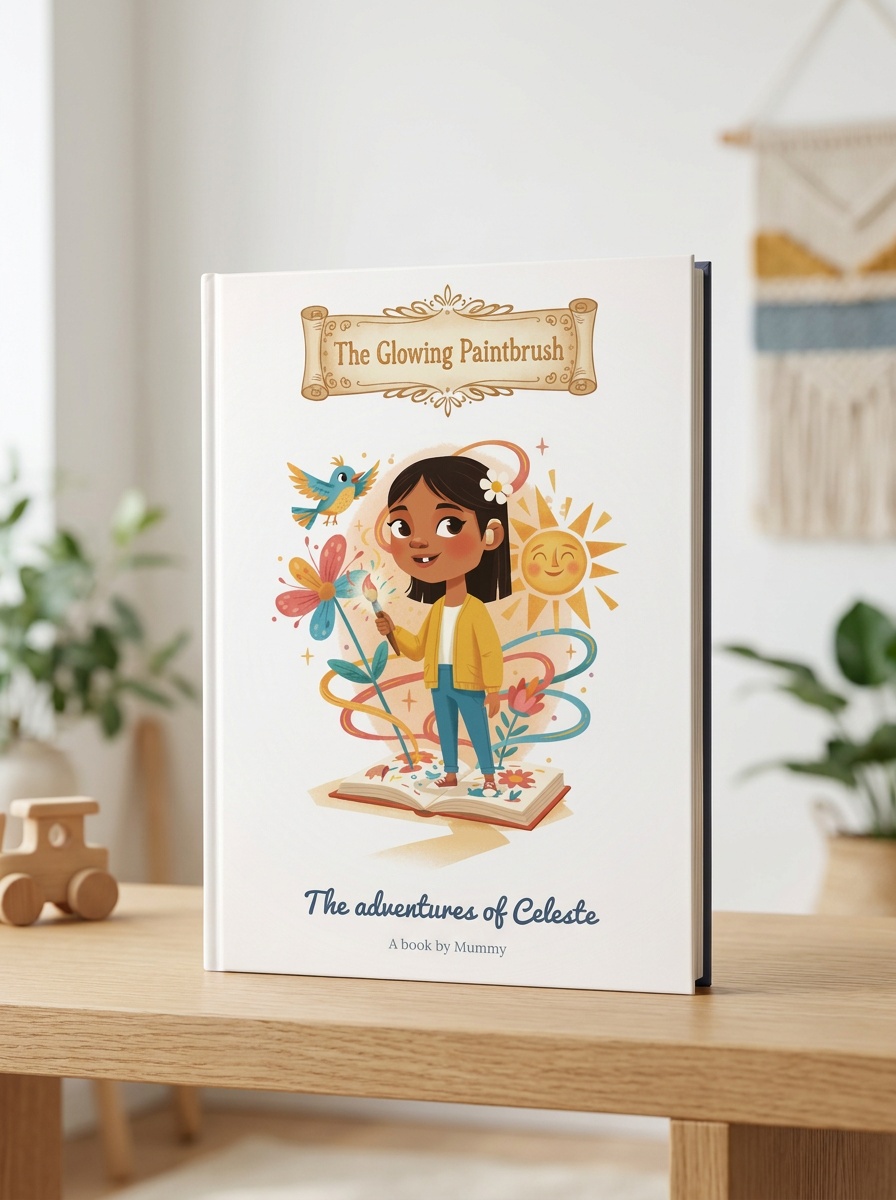
An example book. Every title, cover and story is made for one child.
Questions parents ask
What do teachers actually want as a gift?
Many teachers say the gift they keep is a card or letter the child wrote or drew themselves, especially one that names something specific from the year. Anything else is a bonus.
How much should you spend on a teacher gift?
Nothing is needed. If you add a gift, many families spend about £5 to £10, or put a small amount into a class collection.
When do you give teachers gifts in the UK?
Usually at Christmas and at the end of the school year in July. The end of the year is the bigger thank-you, especially when a child leaves primary school.
Is a whole-class gift a good idea?
Yes, if it is optional and nobody is listed by what they gave. A voucher plus a big card where every child writes or draws one line works well.
Can a Bright Eyed Kid book be about my child's school year?
Yes. You can add a story idea of your own, such as a class trip or the school play, and up to five friends can be co-stars, each with a photo and a name.