What works at each age

- Ages 3 to 4. Thirty seconds, with something to hold or watch: a teddy on the tummy, a feather, bubbles. Make it a game, never a lesson.
- Ages 5 to 6. One minute. They can name a feeling, count breaths to five and lie still for a short body scan if it is told as a story.
- Ages 7 to 8. Two or three minutes. They like the reason behind it: slow breathing slows the heart. Give them a practice to lead for the family.
- Ages 9 to 10. Up to five minutes. They can notice a worry, name it and let it pass. Privacy matters: offer, do not insist, and let them do it alone.
Six practices to learn first
- Teddy breathing. Lie down with a soft toy on the tummy. Breathe in and the teddy rides up; breathe out and it rides down. Rock it to sleep in five breaths.
- Five finger breathing. Trace up the side of each finger breathing in, down the other side breathing out. One hand is five slow breaths, and it works anywhere, even in a classroom.
- Smell the flower, blow out the candle. A long sniff in through the nose, a long, slow blow out through the mouth. The out-breath is the calming part, so make it longer.
- Five things. Name five things you can see, four you can hear, three you can touch, two you can smell and one you can taste. Good for a worried mind, as it brings attention back to the room.
- The glitter jar. A jar of water with glitter glue shaken up. Watch until all the glitter settles. Busy thoughts settle the same way if you wait.
- Body scan as a story. "A little light is walking from your toes, up to your knees, your tummy, your shoulders, your face. Wherever it goes, that part goes soft." Two minutes, lying down.
Mindfulness at the moments you already have
Habits stick when they hang on something that happens every day anyway. Pick one moment and one practice, and keep them together for a month.
- Waking up. Before getting out of bed: three stretches and one thing they are looking forward to today.
- The school run. A listening walk: who can count the most different sounds between the front door and the corner? Or one minute of walking without talking, noticing feet.
- The school gate. A squeeze of the hand and one shared slow breath. For a nervous starter it becomes a private signal.
- Before homework. Five finger breathing, then start. It settles a fidgety child faster than "sit still".
- Snack time. Eat one raisin or a segment of orange as slowly as possible: look, smell, feel, then taste. Children are often amazed how much flavour is in one raisin.
- Bath time. Notice the warm water, the bubbles popping, the sound of the drips.
- Lights out. The body scan, or three good things from today. More ideas for the last half hour are in a bedtime routine for kids.
When a big feeling arrives
Mindfulness is not a way to stop a child feeling cross or sad. It helps them notice the feeling and ride it out. In the middle of a meltdown, talk less and stay close; practise when they are calm, so it is ready when they need it.
- Name it to tame it. "You look really cross." Naming a feeling helps a child step back from it a little.
- Find it in the body. "Where is the cross feeling? Hot in your face? Tight in your fists?" Then breathe into that spot.
- Weather report. "Is it sunny, cloudy or stormy inside you?" Storms pass, and saying it is easier than explaining.
- A calm corner. A cushion, a glitter jar and a favourite book in a quiet spot they choose to go to. Not a punishment place.
- Your own breath. Children copy us. A parent breathing slowly out loud calms a room faster than any instruction.
If worries or anger seem to be taking over a child's days, talk to the school or your GP. Mindfulness is a help, not a treatment.

Bright Eyed Kid
A storybook where they star on every page
Written from scratch around your child, with the people and things they love.
Games that teach noticing
- Sound bell. Strike a glass gently with a spoon. Hands up when you can no longer hear it.
- Mystery bag. Feel an object in a bag without looking and describe it: bumpy, cold, heavier than it looks.
- Cloud watching. Lie on the grass and watch one cloud change shape. Thoughts drift past like clouds.
- Statues. Freeze in a pose and notice which bits of you wobble. Gentle movement ideas are in kids yoga.
- Kindness wish. Close your eyes and send a kind wish to someone: Grandma, a friend who was poorly, the dog.
- Colouring slowly. One picture, no rush, noticing each colour as it goes on.
Making it a habit
- Little and often. One minute a day beats twenty minutes once a week.
- Do it with them. It is a family practice, not a fix for the child.
- Let them lead. From about six, a child loves teaching the grown-ups teddy breathing.
- Keep the words simple: "Let's take three slow breaths" works better than "let's be mindful".
- Do not grade it. A wriggly minute still counts.
A calm story about them
Reading together is one of the most mindful parts of a child's day: a warm lap, one voice, one story, nowhere to be. A story about them holds their attention like nothing else. A Bright Eyed Kid book is a new story written around your child, where they star on every page. You can add a story idea of your own, such as staying brave on a first day or finding a quiet place when the world gets loud, and their story becomes a gentle one to read at lights out.
- About them. You answer three short questions about your child and can add a story idea of your own.
- Family alongside. Up to five co-stars, each with a photo and a name.
- Drawn so they recognise themselves, in one of four picture styles: Playful, Standard, Quirky or Classic.
- Right for their age. The writing changes for every age from 3 to 10.
- You check it first. Read a free story outline before you pay, then change any words or pictures until it feels right.
What it costs

A digital book is £8.49 and a printed hardback is £29.99, plus £2.95 delivery. Every book is 32 pages.
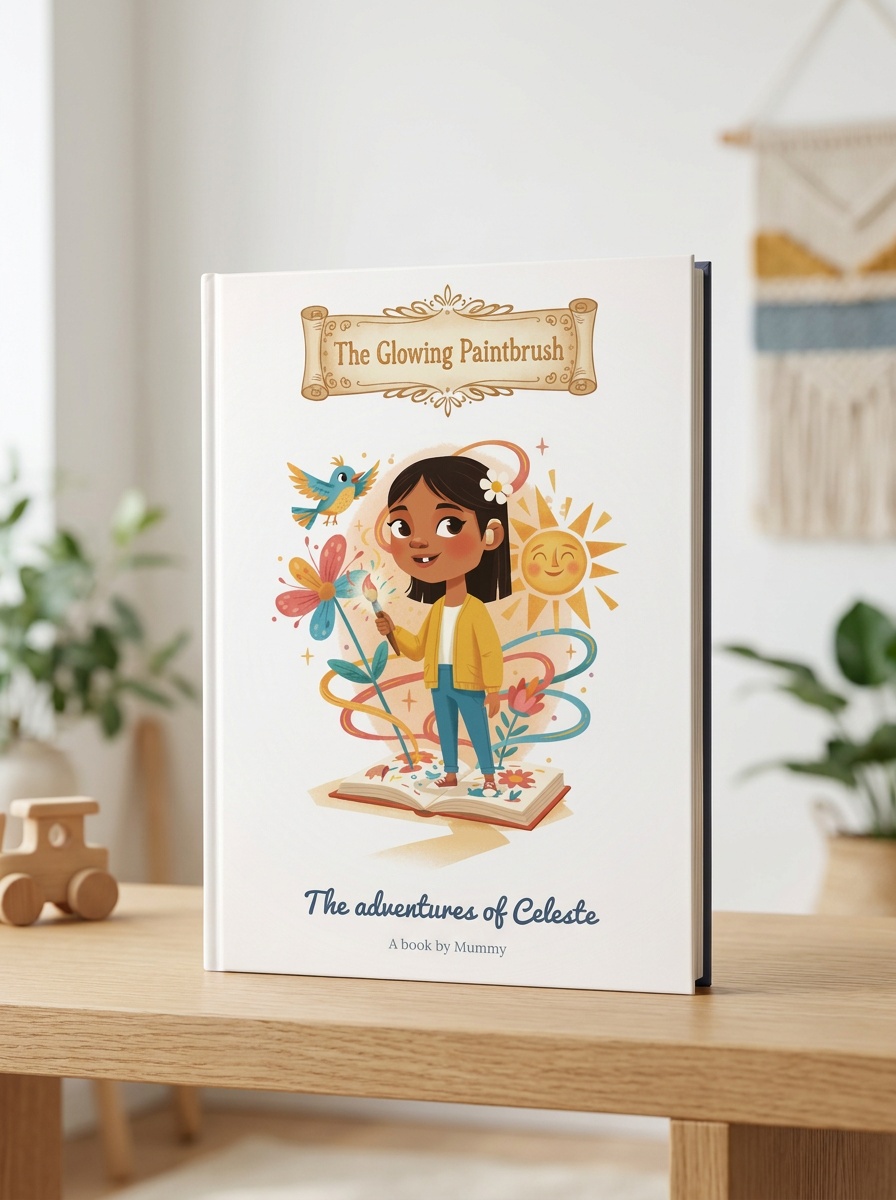
Make a book they will ask for every night
- A new story, written from scratch around them
- Their family, pets and favourite things inside
- Read a free story outline before you pay
- Change any words or pictures until it feels right
32 pages · digital £8.49 · hardback £29.99
An example book. Every title, cover and story is made for one child.
Questions parents ask
What is mindfulness for kids?
Noticing what is happening right now: the breath, the body, sounds and feelings, without judging them. For children it works best as short games of a minute or two, such as teddy breathing or naming five things they can see.
At what age can children start mindfulness?
From about three, if it is kept to thirty seconds and made playful, with a teddy, bubbles or a glitter jar. By seven or eight most children can manage two or three minutes.
What is a simple mindfulness activity for a child?
Five finger breathing: trace up one side of each finger breathing in and down the other side breathing out. One hand makes five slow breaths and it can be done anywhere.
How do I help my child calm down with mindfulness?
Practise when they are calm so it is ready later. In a big feeling, name it, ask where it is in their body, and breathe slowly with them; keep words few and stay close.
When is the best time to do mindfulness with kids?
Tie it to a moment you already have every day: waking up, the school run, before homework or lights out. One minute at the same moment each day builds the habit.