What a bedtime routine does
A routine is a set of signals. The same few things, in the same order, tell a child's body that sleep is coming, long before you say the word "bed". That is why the order matters more than the clock.
- Keep it short. Three or four steps, about half an hour from start to lights out.
- Keep it the same. The same steps at Granny's, on holiday and on a Saturday.
- End on the best bit. The story comes last, so every earlier step is a step towards it.
The four steps, in order
- Wind down. Screens off, big lights down, toys back in the box. A five-minute warning helps: "two more goes, then bath".
- Wash. A bath, a shower or a flannel at the sink. Warm water is a signal in itself. It does not need to be a bath every night.
- Pyjamas and teeth. Then a last wee and a last drink of water, so both are done before the story.
- Story, then lights out. In their room, in bed, with the lamp on. One cuddle, one "goodnight", the same words every night.
A sample evening
Work backwards from the time you want them asleep. For lights out at 7.30:
- 6.00 Tea.
- 6.45 Screens off. Quiet play: a jigsaw, drawing, bricks.
- 7.00 Bath or wash.
- 7.10 Pyjamas, teeth, toilet.
- 7.15 Story in bed.
- 7.30 Lights out.
Move the whole block later for an older child. The gaps stay the same.
How much sleep do they need?
NHS children's sleep services give a rough guide: about 10 to 13 hours a night at ages 3 to 5, and about 9 to 12 hours for school-age children. Every child is different, so use the morning as your test. A child who wakes by themselves and is cheerful by breakfast is getting enough. If sleep is a real worry, your GP or health visitor is the right person to ask.
The routine by age
- 3 to 4: they want everything the same, so give them that. The same two songs in the bath, the same teddy, often the same book for a fortnight. Let them choose between two pairs of pyjamas and two books. Two choices feel like power, ten feel like a delay.
- 5 to 6: school makes them tired and full of news. Add two minutes of "best bit of today" before the story. They can start reading a page to you, then you read the rest. Ideas in books for 5 year olds.
- 7 to 8: they can run most of it alone: shower, teeth, pyjamas, with you arriving for the story. A chapter a night works well now, because it ends on "what happens next?" and bed becomes somewhere they want to be.
- 9 to 10: later lights out and more say. Try a deal: twenty minutes reading alone with their own lamp, after ten minutes of you reading aloud. Children this age still love being read to. Homework and screens finish well before the routine starts.

Bright Eyed Kid
A storybook where they star on every page
Written from scratch around your child, with the people and things they love.
Let them own it
- Draw the routine together. Four pictures on one sheet of paper, stuck at their height by the bathroom door. Young children follow a picture more happily than an instruction.
- Give them a job. Choosing the book, turning on the lamp, putting teddy to bed first.
- Use a timer for teeth. A two-minute sand timer ends the argument about how long is long enough.
The story is the heart of it
If you only keep one step on a hard night, keep the story. Ten minutes side by side with a book is the calmest part of the day for both of you, and it is the part they will remember.
- Agree the number first. "Two books tonight", said before you open the first one.
- Read slower as you go. Let your voice get quieter towards the last page.
- Keep a bedtime shelf. Five or six calm favourites by the bed, so choosing takes seconds.
What to read is in bedtime stories for kids and picture books for kids.
When the routine slips
- "One more story." Say yes to one more page of talking about the pictures, with the book closed. Then goodnight.
- Getting out of bed. Walk them back, say the same goodnight words, leave. Calm and boring wins.
- After a holiday or Christmas. Bring bedtime back by fifteen minutes a night. The steps do the work, and it usually settles within the week.
- When the clocks change. Start the routine ten minutes earlier or later each night for a few days before.
- Two children, two bedtimes. Bath together, then the younger one's story first while the older one reads alone. The later bedtime is the older child's reward for waiting quietly.
- A sleepover or a late party. One late night is fine. Go back to the usual steps the next evening.
A bedtime book where they star
The last step works best with a book they are keen to get to. A Bright Eyed Kid book is a new story written from scratch around your child, and they star on every page.
- It is about them. You answer three short questions about your child, and the story is built from the answers. You can add a story idea of your own too.
- They can see it is them. They are drawn from one clear photo, in one of four picture styles: Playful, Standard, Quirky or Classic.
- Their people are in it. Up to five co-stars can have a part, each with a photo and a name: a sister, a grandad, the dog who sleeps on their bed.
- It reads right for their age. The writing changes for every age from 3 to 10, so it suits a three year old's lap and a ten year old's lamp.
- You see it first. Read a free story outline before you pay, then change any words or pictures until it feels right.
At 32 pages it fits a bedtime: one sitting for a younger child, two or three nights for an older one reading it to you.
What it costs

A digital book is £8.49 and a printed hardback is £29.99, plus £2.95 delivery. Every book is 32 pages.
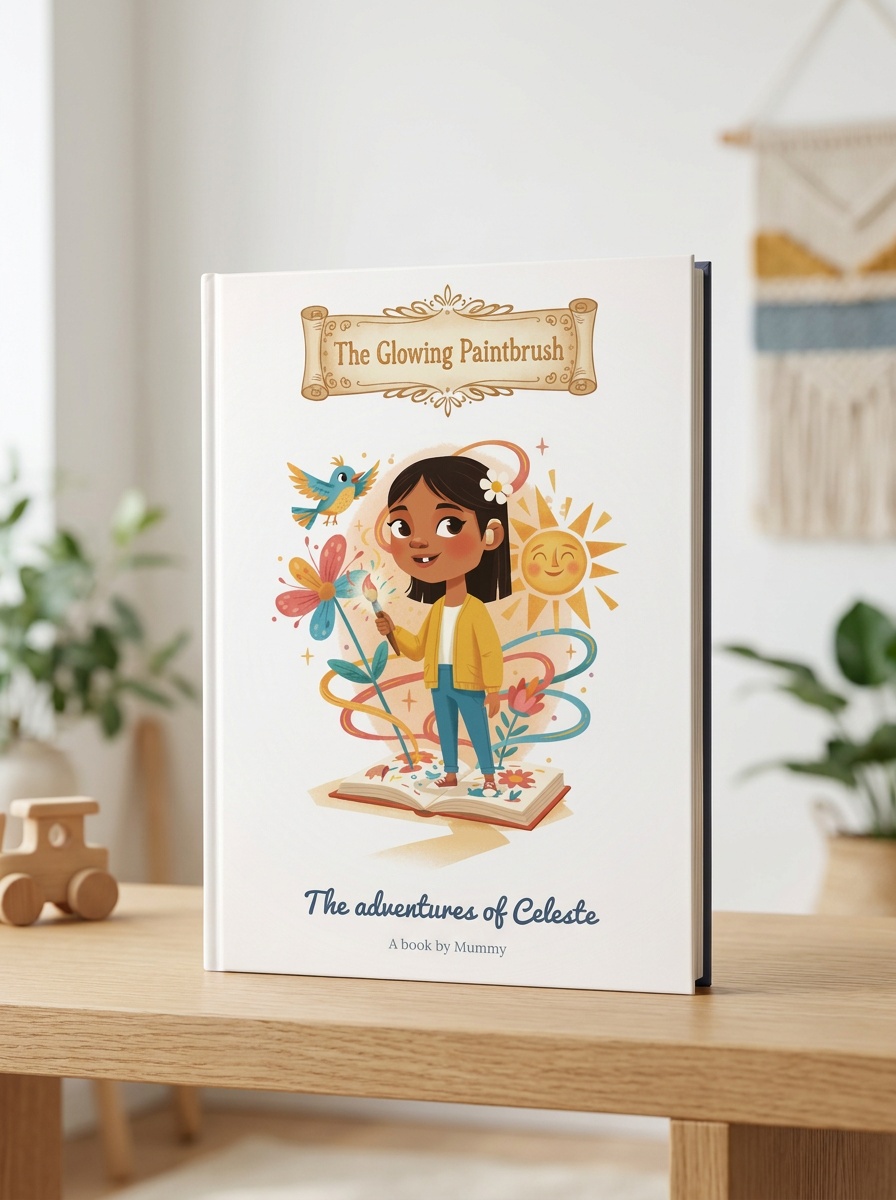
Make a book they will ask for every night
- A new story, written from scratch around them
- Their family, pets and favourite things inside
- Read a free story outline before you pay
- Change any words or pictures until it feels right
32 pages · digital £8.49 · hardback £29.99
An example book. Every title, cover and story is made for one child.
Questions parents ask
What is a good bedtime routine for a child?
Four short steps in the same order every night: wind down with screens off, wash, pyjamas and teeth, then a story in bed and lights out. About half an hour in all.
How long should a bedtime routine take?
About half an hour from the first step to lights out. Longer than that and it stops feeling like a path to bed.
What time should a child go to bed?
Work back from when they need to get up. As a rough NHS guide, children aged 3 to 5 need about 10 to 13 hours a night and school-age children about 9 to 12.
Should older children still have a bedtime story?
Yes. Children of nine and ten still love being read to. Read aloud for ten minutes, then let them read alone with their own lamp.
Can a Bright Eyed Kid book be a bedtime book?
Yes. Every book is 32 pages, written for your child's age, and they star on every page. It is one sitting for a younger child and two or three nights for an older one.