Why picture books matter at every age
In a good picture book, the words and pictures do different jobs. The words say one thing; the pictures show another, or add a joke, a clue or a feeling. Reading both together is a real skill, and it is the same skill children later use to understand film, comics and longer novels.
That is why picture books keep earning their place well after a child can read alone. Younger children enjoy the story; older children notice how it is told.
Ages 3 to 5
Look for strong rhythm, a clear story and pictures with plenty to point at.
- The Gruffalo by Julia Donaldson and Axel Scheffler: rhyme, a clever mouse and a big reveal.
- The Tiger Who Came to Tea by Judith Kerr: a calm classic for a first read.
- Owl Babies by Martin Waddell and Patrick Benson: gentle and reassuring.
- Oi Frog! by Kes Gray and Jim Field: rhymes that make them laugh.
- Whatever Next! by Jill Murphy: a small bear goes to the Moon in a cardboard box.
- Rosie's Walk by Pat Hutchins: the words never mention the fox, but the pictures do.
More ideas in our lists of books for 3 year olds and books for 4 year olds.
Ages 5 to 7
Now children can enjoy irony, where the pictures show the truth and the words do not.
- The Day the Crayons Quit by Drew Daywalt and Oliver Jeffers: funny letters from the crayons.
- This Is Not My Hat by Jon Klassen: the pictures say what the words do not.
- Dogger by Shirley Hughes: a lost toy and a kind big sister.
- Lost and Found by Oliver Jeffers: a boy, a penguin and a long trip.
- The Storm Whale by Benji Davies: a quiet story about a boy, his dad and a stranded whale.
- Gorilla by Anthony Browne: a lonely girl, a busy father and a birthday night out.
Ages 8 to 10
Older children are ready for picture books that ask them to do the work: to fill in gaps, read wordless pages, or notice something odd in the background.
- Journey by Aaron Becker: no words, so they tell the story.
- The Arrival by Shaun Tan: a wordless story about arriving in a strange new country, to read slowly.
- Flotsam by David Wiesner: a camera washed up on the beach, full of impossible photographs.
- Voices in the Park by Anthony Browne: one walk in the park, told by four different people.
- Where the Wild Things Are by Maurice Sendak: still worth a read at any age.
For longer reads at this age, see books for 9 year olds.
Wordless picture books
Wordless books are often underrated. They suit pre-readers, children learning English, reluctant readers and confident readers alike, because everyone reads them at their own level. A three year old names what they see. A seven year old tells the story. A ten year old explains why the colours change halfway through.
Try telling a wordless book together, taking turns page by page. Then ask them to tell it to someone else.
Bright Eyed Kid
A storybook where they star on every page
Written from scratch around your child, with the people and things they love.
Reading the pictures together
- Slow down. Give them time to look before you turn the page.
- Ask what they can spot. Hidden animals, repeated objects, a character in the background.
- Let them guess what happens next from the picture alone.
- Look at faces. How is that character feeling? How can you tell?
- Talk about colour and size. Why is the room darker now? Why is the monster so big on this page?
- Re-read. Children notice new details every time, and that is the point.
Building a picture book collection
- Mix old and new. A few classics from your own childhood, a few recent favourites.
- Show lots of different lives. Families, places and children who look like them, and ones who do not.
- Use the library. Borrow widely, then buy the ones they keep asking for.
- Charity shops often sell picture books for about £1, so you can take a chance on new authors.
- Keep the ones they outgrow. Older children often return to old favourites, especially when they are tired or unwell.
Making your own picture book
Children love making picture books of their own. Fold four sheets of paper in half, staple the spine, and let them draw a story with one sentence per page. It is a good rainy afternoon, and it shows them how words and pictures share the work. It is also a fun idea for World Book Day.
Why a picture book where they star works at any age
A picture book where your child is the main character makes them look closely at every page, because they are looking for themselves. Younger children point and name; older children notice the details: their own trainers, the dog's ears, the way their sister's hair falls.
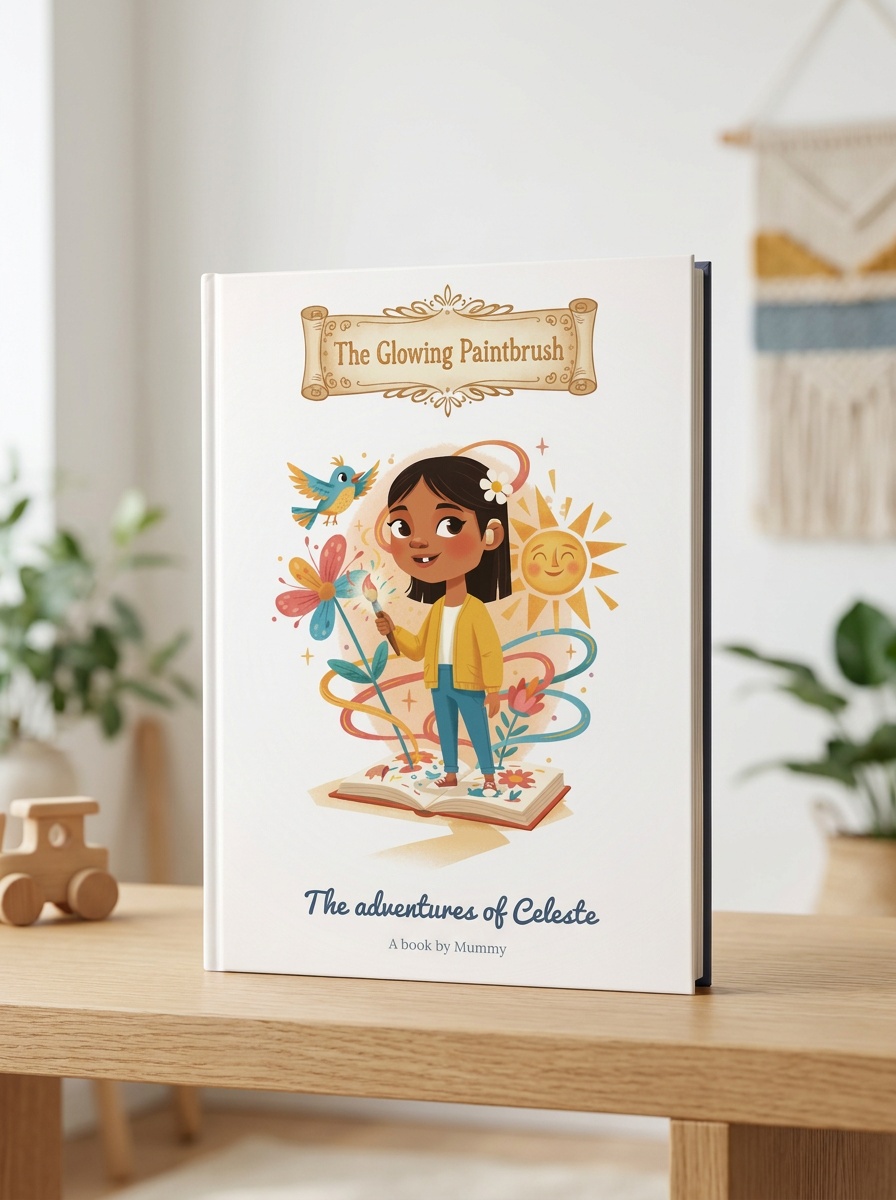
A Bright Eyed Kid book is a fully illustrated picture book made for one child, who looks like themselves on every page. Choose from four picture styles: Playful, Standard, Quirky or Classic. The writing changes with the age you choose, from 3 to 10, so the same idea suits a nursery child and a confident reader. Up to five co-stars, such as siblings, friends or pets, can join in, each with a photo.
What it costs
A digital book is £8.49 and a printed hardback is £29.99, plus £2.95 delivery. Every book is 32 pages.
Make a book they will ask for every night
- A new story, written from scratch around them
- Their family, pets and favourite things inside
- Read a free story outline before you pay
- Change any words or pictures until it feels right
32 pages · digital £8.49 · hardback £29.99
An example book. Every title, cover and story is made for one child.
Questions parents ask
What age are picture books for?
All ages. Most are made for ages 3 to 7, but many are written with older readers in mind, and wordless books suit every age.
Are picture books good for older children?
Yes. Wordless and layered picture books ask older children to read the pictures, spot what the words leave out and tell the story themselves.
What is a good wordless picture book?
The Snowman by Raymond Briggs for younger children, and Journey by Aaron Becker or The Arrival by Shaun Tan for older ones.
How do I get my child to look at the pictures, not just the words?
Slow down, ask what they can spot, ask how a character feels and how they can tell, and let them guess what happens next before you turn the page.
Is a Bright Eyed Kid book a picture book?
Yes. It is a fully illustrated book with your child on every page, in one of four picture styles.