The week before, at home

The day goes better when the week leading up to it has some reading in it. None of these take long.
- A reading den. A blanket over two chairs, a torch, cushions and a pile of books. Read in it every night that week.
- A shelf tidy. Take every book off the shelf. They choose their five favourites to put back at the front, and pass outgrown ones to a younger cousin or the school book swap.
- Breakfast from a book. Marmalade sandwiches for Paddington, or a big tea for the Tiger Who Came to Tea. Let them choose the book and the menu.
- A library trip. Let them pick something you would never have picked. Join them up for their own card if they do not have one.
- Swap the bedtime reader. One night, they read to you. Younger children can "read" a familiar book from the pictures.
No costume needed
Many schools now make dressing up optional. If your child would rather not, or there is no time, these count just as much.
- Bring a favourite book and one reason. One sentence about why they love it is enough. Practise it in the car.
- Bring an object from a story. A golden ticket, a jar of marmalade, a toy owl, a single wellington. Classmates guess the book.
- Pyjamas and a bedtime story. Comfortable and easy, and it counts.
- A badge. Draw a favourite character on a circle of card and pin it on a school jumper.
If they do want to dress up, our guide to World Book Day costume ideas has plenty that use clothes you already own.
Things to make
- A bookmark with their favourite character on it, covered in clear tape so it lasts.
- A letter to a character. Dear Gruffalo, Dear Matilda. What would they ask? What advice would they give?
- A new ending for a book they know well, drawn as the last page.
- A tiny book of their own. Fold a sheet of A4 in half twice, cut the top fold, staple the spine. Eight small pages is plenty for a story starring themselves.
- A book map. Draw the world of a story: the wood, the river, the house. Older children love labelling everything.
Using the book token
Primary school children in the UK usually bring home a £1 World Book Day token. It can be swapped for one of the special World Book Day books, or put towards another book in a shop that takes part.
- Make choosing the book a small outing. A bookshop on a quiet afternoon, with time to look properly.
- Read the list of World Book Day books together the night before, so they arrive with a shortlist.
- Write their name and the year inside the front cover when you get home.
- Check the date printed on the token so it is not forgotten in a school bag.
For the day itself
- Pack the book they are taking in a plastic bag inside their school bag, in case of rain.
- Ask at pick-up what books their friends brought. It is a good way to find the next read.
- Finish the day with the book they chose, read together at bedtime.

Bright Eyed Kid
A storybook where they star on every page
Written from scratch around your child, with the people and things they love.
Keep it going after the day
The best World Book Days lead somewhere. Pick one small habit to carry on into spring: a library trip every other Saturday, ten minutes of reading before lights out, or a family "book of the month" that everyone talks about at tea. Write the habit on the calendar, and check in at Easter to see if it stuck.
By age
- Ages 3 to 5 (nursery and Reception): one picture book read many times that week, acted out with toys. Let them tell it back to you from the pictures.
- Ages 6 to 8 (Years 1 to 3): the object game, a bookmark, a letter to a character, a family quiz on books everyone knows.
- Ages 9 to 10 (Years 4 and 5): a short write-up of a book for the family, a reading challenge for the month, or reading a picture book to a younger child.
Small budget ideas
- The library is free and usually has a World Book Day display in early March.
- A book swap with friends: everyone brings one, everyone leaves with one.
- Charity shop books, often about £1, for building up a shelf.
- Home-made bookmarks and tiny books cost a sheet of paper.
For reading ideas for the rest of the year, see our guides to picture books for kids and books for 7 year olds.
Why a book where they star suits World Book Day
World Book Day asks children which book they love. For some children the answer comes easily. For others, a book where they are the main character is the one that makes reading click, because the story is about someone they know very well.
A Bright Eyed Kid book is written around your child, with them on every page and on the cover. They can take it in to show the class, or read a page aloud. The writing changes with the age you choose, so a Reception child gets short read-aloud lines and a Year 5 child gets a fuller story. Brothers, sisters, friends and pets can be co-stars.
What it costs

A digital book is £8.49 and a printed hardback is £29.99, plus £2.95 delivery. Every book is 32 pages.
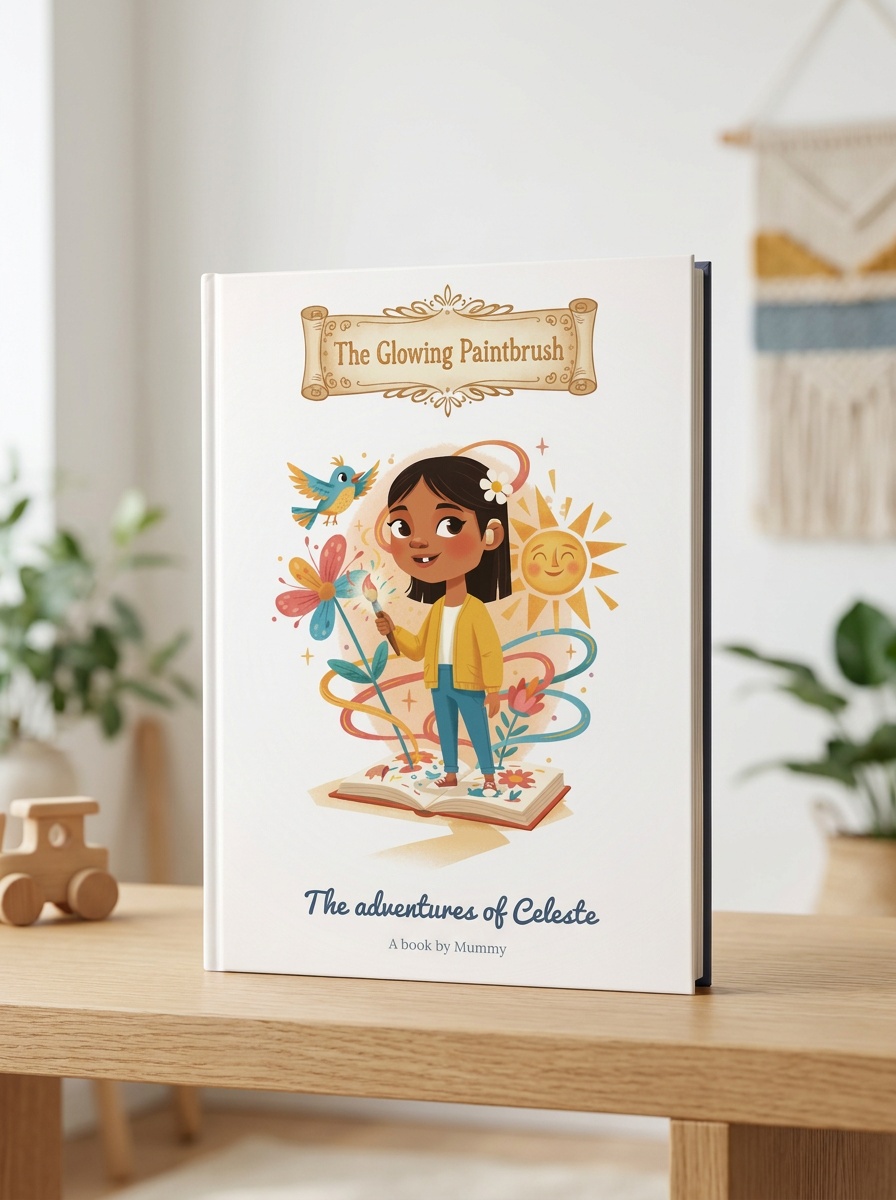
Make a book they will ask for every night
- A new story, written from scratch around them
- Their family, pets and favourite things inside
- Read a free story outline before you pay
- Change any words or pictures until it feels right
32 pages · digital £8.49 · hardback £29.99
An example book. Every title, cover and story is made for one child.
Questions parents ask
When is World Book Day?
In the UK and Ireland it is usually the first Thursday in March. Schools often celebrate across the whole week.
What can we do for World Book Day at home?
Build a reading den, have a breakfast from a book, sort the bookshelf, visit the library, or make a tiny book of their own.
What are World Book Day ideas without a costume?
Bring a favourite book and one reason why, bring an object from a story for others to guess, wear pyjamas with a bedtime story, or make a character badge.
What is the World Book Day token for?
Primary children in the UK usually get a £1 token. It can be swapped for one of the special World Book Day books or put towards another book in a shop that takes part.
Can my child take in a book about themselves?
Yes. A Bright Eyed Kid book has your child on every page and on the cover, so it is a book about them they can share with the class.