What a 3 year old wants from a book
Three year olds can follow a slightly longer story than a toddler, but they still want the familiar. They like knowing what comes next and saying it before you do. They like books with a pattern: a question repeated on every page, a refrain to chant, a flap that hides the same kind of surprise. They also like stories about their own world: bath time, the park, a trip to the shops, a grown-up who goes away and comes back.
Look for books that are short enough to finish before attention runs out, with pictures big enough to point at and words that sound good aloud.
Rhymes to join in with
- The Gruffalo and Room on the Broom by Julia Donaldson and Axel Scheffler. Both have refrains children pick up after a few reads.
- We're Going on a Bear Hunt by Michael Rosen and Helen Oxenbury. Do the actions: swishy swashy through the grass.
- Each Peach Pear Plum by Janet and Allan Ahlberg, a rhyme and an I-spy game at once.
- Hairy Maclary from Donaldson's Dairy by Lynley Dodd, with a pile-up of dogs and names to roll round the mouth.
- Oi Frog! by Kes Gray and Jim Field, a silly rhyming book about who sits on what.
Lift-the-flap and join-in books
- Where's Spot? by Eric Hill.
- Dear Zoo by Rod Campbell.
- Brown Bear, Brown Bear, What Do You See? by Bill Martin Jr and Eric Carle.
- Don't Let the Pigeon Drive the Bus! by Mo Willems, where the child gets to shout no.
Stories with a big feeling
- Owl Babies by Martin Waddell and Patrick Benson, for missing a grown-up.
- The Colour Monster by Anna Llenas, for naming feelings.
- Peace at Last by Jill Murphy, for anyone who has ever struggled to get to sleep.
- Hug by Jez Alborough, almost wordless, all about wanting a cuddle.
Funny and everyday
- The Tiger Who Came to Tea by Judith Kerr.
- The Very Hungry Caterpillar by Eric Carle, which doubles as counting and days of the week.
- Mr Gumpy's Outing by John Burningham, a boat trip that goes gently wrong.
- Elmer by David McKee, about being different and being liked for it.
- Supertato by Sue Hendra, mayhem in the supermarket.
Books for big moments
Three is a year of changes: starting nursery, giving up a dummy, potty training, a new baby, a house move, a first trip to the dentist. A picture book about the thing that is coming gives a child words for it and lets them practise it safely first. Ask at the library, which will usually have a shelf of these, and read them a few times before the day rather than on the morning itself.
Bright Eyed Kid
A storybook where they star on every page
Written from scratch around your child, with the people and things they love.
What to skip at this age
- Long stories with small pictures. They are waiting for the next picture, not the next paragraph.
- Too many new books at once. A small pile, rotated, gets more love than a full shelf.
- Books that frighten them, even mildly. Some children love a scary Gruffalo; others need to wait.
Board book, paperback or hardback?
- Board books survive chewing, standing on and being thrown, but many three year olds are ready to move on from them.
- Paperbacks are cheap and light, so good for the bag and for trying new authors.
- Hardbacks are best for the favourites they will want every night, and for books you want to keep.
How to read with a 3 year old
- Pause before the rhyme and let them finish the line.
- Point and ask: where is the dog? What colour is the boat? What do you think is under the flap?
- Use voices, even bad ones. A deep voice for the bear, a squeak for the mouse.
- Let them turn the pages, even if they skip some.
- Read favourites as often as they ask. Repetition is how they learn new words and feel safe.
- Talk about their own life: 'We went to the park like that, didn't we?'
- Stop while it is still fun. If they wander off halfway through, that is fine.
Building a reading habit
A book at bedtime is the obvious slot, but it is not the only one. A basket of books by the sofa, a book in the changing bag, a bath book, a library trip every other Saturday: the more often books turn up, the more normal they become. Most UK libraries let children join for free and borrow picture books, which is the cheapest way to find out what your child loves before buying it. Our guide to bedtime stories for kids has ideas for making the last story of the day calm and cosy.
Why a book where they star suits a 3 year old
Three year olds are fascinated by themselves, and that is a good thing. They point at photos of themselves, talk about themselves in the third person and want to know where they were before they were born. A story where they are on every page holds their attention like nothing else, because every picture contains someone they know.
A Bright Eyed Kid book for this age is written with short, bouncy sentences made for reading aloud. You add their name, age and a photo, and up to five co-stars such as a sibling, a grandparent, the dog or their favourite teddy. Before paying, you read a free story outline and change it until it feels right. If your child is nearly four, our list of books for 4 year olds is the next step, and our guide to picture books for kids covers the wider range.
What it costs
A digital book is £8.49 and a printed hardback is £29.99, plus £2.95 delivery. Every book is 32 pages.
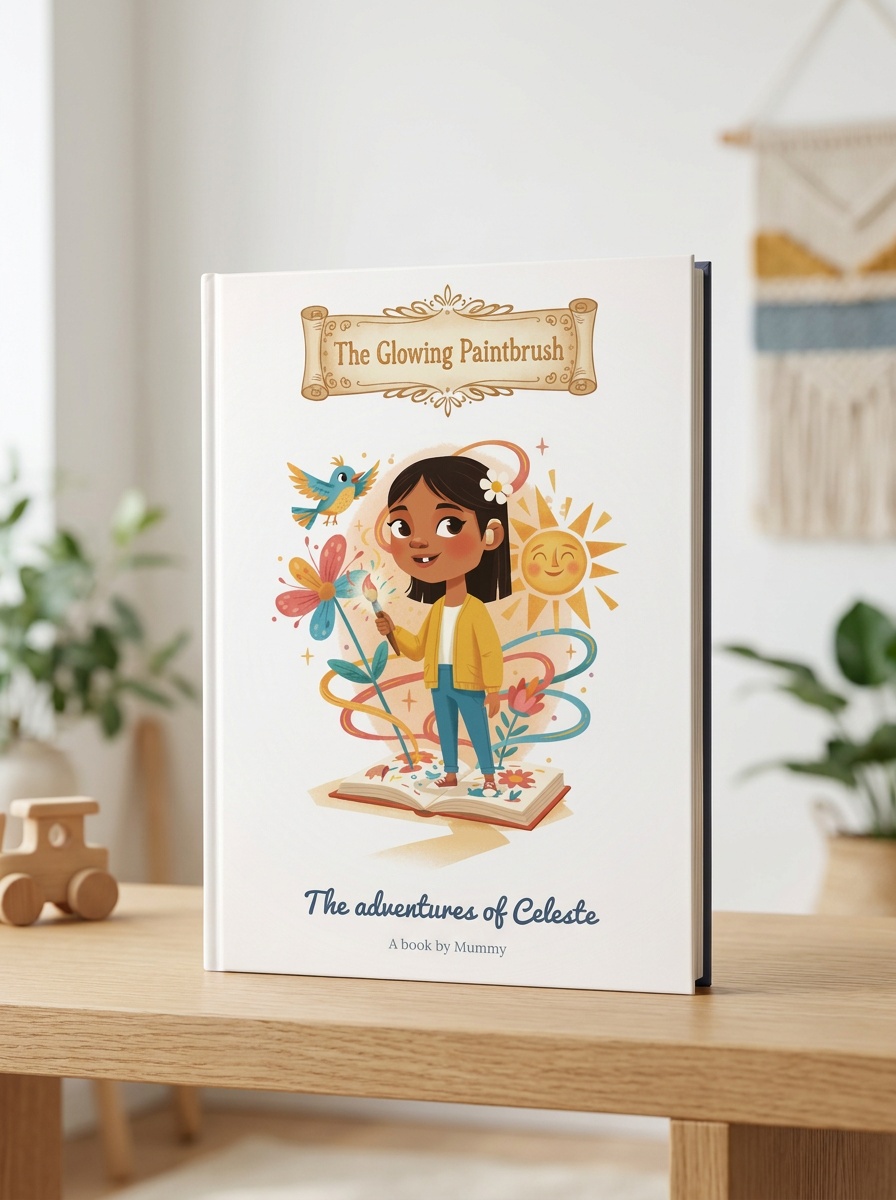
Make a book they will ask for every night
- A new story, written from scratch around them
- Their family, pets and favourite things inside
- Read a free story outline before you pay
- Change any words or pictures until it feels right
32 pages · digital £8.49 · hardback £29.99
An example book. Every title, cover and story is made for one child.
Questions parents ask
What kind of books suit a 3 year old?
Short books with rhythm, repetition, flaps or pictures to point at, which they can join in with. Stories about everyday life, like bath time and the park, work well too.
Why does my 3 year old want the same book every night?
Repetition is how they learn words and feel safe. Knowing what comes next is part of the fun. It is a good sign.
How long should I read to a 3 year old?
As long as they are enjoying it. For many three year olds that is one or two short books, sometimes more. Stop while it is still fun.
Should a 3 year old be learning to read?
Most children in England start learning to read in Reception, the year they turn five. At three, being read to, singing rhymes and talking about pictures is the best preparation.
Is a personalised book good for a 3 year old?
Yes. Seeing themselves and their family in a story keeps young children looking and listening. Bright Eyed Kid books for this age use short, bouncy sentences made for reading aloud.