Why the bedtime story matters

A story at bedtime does a lot of quiet work. It tells a child the day is ending. It gives them a few minutes of your full attention. And it fills their head with something gentle to think about as they drift off, instead of the argument at school or the scary bit of a cartoon.
It does not need to be long or clever. It needs to be the same shape most nights.
A routine that settles them
- Same time each night, with screens off a while before.
- Bath or wash, pyjamas, teeth.
- Lights low, into bed, one story. Two on a good night.
- A short chat: the best bit of the day, and one thing they are looking forward to.
- Lights out, with the same goodnight words every time.
Let them choose the book, but agree how many before you start. "One book, and you pick" stops the bargaining.
What makes a good bedtime story
- It slows down. Excitement in the middle is fine, but the last pages should be calm, safe and warm.
- It has a rhythm. Repetition and rhyme are soothing, especially for younger children.
- It ends at home, or somewhere that feels like home. Many classic bedtime books finish with a character tucked up in bed.
- It is the right length. Finish before their eyes close, not after.
- It is not frightening. Save the witches and monsters for the afternoon if your child is sensitive.
Stories by age
Ages 3 to 4
Short picture books they can join in with. They will want the same one fifty nights running, and that is fine: knowing what comes next is part of the comfort.
- Goodnight Moon by Margaret Wise Brown.
- Guess How Much I Love You by Sam McBratney.
- Can't You Sleep, Little Bear? by Martin Waddell.
- Peace at Last by Jill Murphy.
Ages 5 to 6
Longer picture books and first collections of short stories. They are starting to read, so let them read a page or a repeated line to you.
- Owl Babies by Martin Waddell.
- The Tiger Who Came to Tea by Judith Kerr.
- Room on the Broom by Julia Donaldson.
Ages 7 to 8
The chapter-a-night stage. A longer story read over a week or two gives them something to look forward to.
- The Owl Who Was Afraid of the Dark by Jill Tomlinson.
- The Enchanted Wood by Enid Blyton.
- Winnie-the-Pooh by A. A. Milne.
Ages 9 to 10
Many children this age still love being read to, even if they read alone in the day. Pick books slightly above their own reading level, so you carry the hard words.
- Charlotte's Web by E. B. White.
- The Lion, the Witch and the Wardrobe by C. S. Lewis.
For more by age, see our guides to books for 4 year olds and books for 8 year olds.
How to read aloud at bedtime
- Start in your normal voice and get slower and quieter as the story goes on.
- Do voices in the middle, not at the end.
- Pause before turning the page. Let them guess what happens next.
- If they interrupt with questions, that is part of it. Answer briefly and carry on.
- Keep the last line soft, then close the book gently. It is a signal.

Bright Eyed Kid
A storybook where they star on every page
Written from scratch around your child, with the people and things they love.
Telling a story with no book
Some nights the best story is one you make up. A simple shape helps:
- Someone: a small animal, a toy, or the child themselves.
- Wants something: to find a lost button, to visit the moon, to make a friend.
- A small problem: it is too dark, too far, too high.
- Help arrives: a kind owl, a brave sister, a clever idea.
- Home to bed: always end tucked up and safe.
Running stories work well too. The same characters each night, a new small adventure every time, and your child can suggest what happens.
Small things that help
- A bedside basket with five or six books, swapped every week or so from the library, keeps the choice small.
- A warm, dim lamp instead of the big light.
- A reading torch for older children who want ten minutes alone after you leave.
- Audiobooks on the nights you are away or they share a room, kept at a low volume.
- A grandparent on a video call reading the story now and then, as a treat.
When bedtime stories go wrong
- "One more!" Agree the number first, and offer the extra story at breakfast instead.
- Too wound up to listen. Try a quieter book, dim the lights further, or let them hold a soft toy.
- Siblings of different ages. Read the younger one's book first, then a chapter for the older child.
- You are exhausted. A short book read with attention beats a long one read on autopilot.
A bedtime story where they star
Children love hearing about themselves, and a story where they are the one who is brave, kind and clever is a lovely thing to fall asleep to. In a Bright Eyed Kid book your child stars on every page, looking like themselves, with their family, pets and favourite things around them.
You can add your own story idea, such as a night-time adventure that ends safely back in their own bed, and the writing suits their age, from soft read-aloud rhythm for a three year old to a longer story for a ten year old. You read a free outline before you pay and change it until it feels right.
What it costs
A digital book is £8.49 and a printed hardback is £29.99, plus £2.95 delivery. Every book is 32 pages.
Make a book they will ask for every night
- A new story, written from scratch around them
- Their family, pets and favourite things inside
- Read a free story outline before you pay
- Change any words or pictures until it feels right
32 pages · digital £8.49 · hardback £29.99
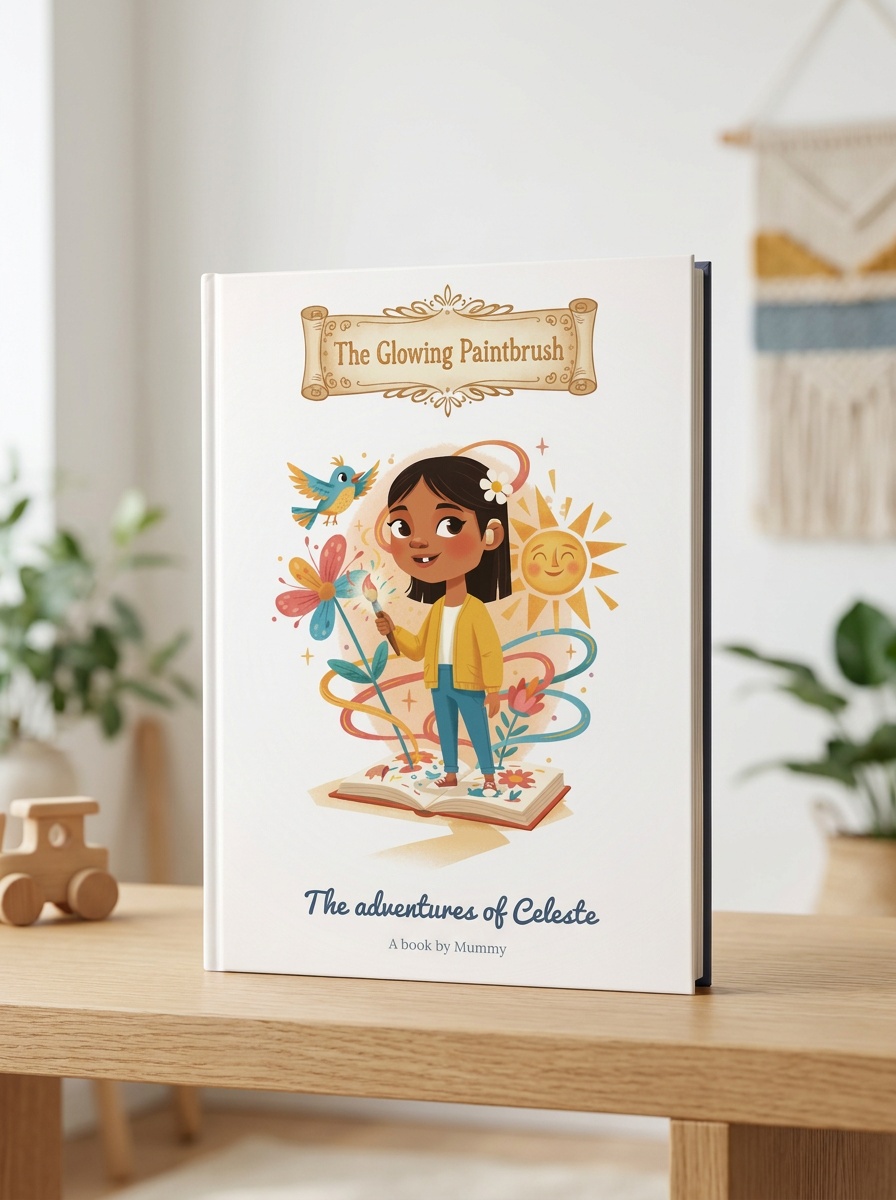
An example book. Every title, cover and story is made for one child.
Questions parents ask
How long should a bedtime story be?
Around ten minutes suits most children. Finish while they are calm rather than over-tired.
Is it fine to read the same book every night?
Yes. Young children find repetition comforting, and knowing what comes next helps them settle.
What age do bedtime stories stop?
There is no set age. Many children aged 9 and 10 still love being read to, often a chapter at a time.
What if my child gets scared by a story?
Swap it for a gentler one at bedtime and save exciting stories for the daytime. Always end on something safe and warm.
Can my child star in their own bedtime story?
Yes. A Bright Eyed Kid book is written around your child, with them on every page, for ages 3 to 10.