Before you deal

- Take out what you do not need. For the youngest, use only the cards from ace to 5, or just two suits. A small pile feels winnable.
- Play open hands first. Everyone lays their cards face up for the first few rounds, so you can coach out loud. Turn them over once the rules stick.
- Help small hands. Stand cards in the slots of an upturned egg box, or tuck them between the pages of a closed book. Shop-bought card holders do the same job.
- Keep it short. Most of these games take ten minutes. Stop while everyone still wants one more.
Ages 3 to 5: matching and noticing
- Pairs (Pelmanism). Lay the cards face down in a grid. Take turns to turn over two; if they match in number, keep them and go again. The most pairs wins. Start with five pairs and add more as memory grows.
- Snap. Split the pack. Players take turns to turn a card onto their own pile; when two top cards match, the first to shout "Snap!" takes both piles. For little ones, play slow snap, where the grown-up waits a second before shouting.
- Colours and suits. Sort the pack into red and black, then into the four suits, naming them together: hearts, diamonds, clubs, spades. It sounds simple, but every game below is built on it.
- Higher or lower. Turn over a card; the child guesses whether the next will be higher or lower. Three right in a row and they turn the next one themselves.
Ages 5 to 7: first rules and turns
- Go Fish. Deal five cards each, the rest in a face-down pond. On your turn, ask one player for a number you hold: "Have you got any sevens?" If they do, they hand them over; if not, they say "Go fish" and you take one from the pond. Collect all four of a number to lay down a set. Most sets wins.
- Beggar My Neighbour. Split the pack between two players, face down. Take turns to flip a card into the middle. When someone turns an ace or a picture card, the other player must pay: four cards for an ace, three for a king, two for a queen, one for a jack. If they turn up an ace or picture card while paying, the payment switches back the other way. Whoever pays without turning one up loses the pile. No choices at all, so it is pure luck and evens out ages perfectly.
- Old Maid. Take out one queen, so one queen has no partner. Deal everything. Players lay down pairs, then take turns to draw a card from the hand of the player on their left and lay down any new pair. Whoever is left holding the last queen is the Old Maid. A joker works instead.
- War. Each player turns a card at once; the higher card takes both. Two the same means war: three cards face down and one face up, highest takes the lot. It quietly teaches which number is bigger.
Ages 7 to 8: choices and tactics
- Crazy Eights. Deal seven each and turn one card up. On your turn, play a card that matches the top card by number or suit, or play an eight and choose the next suit. If you cannot go, pick up one. First to empty their hand wins. Add family rules: a two makes the next player pick up two, a jack skips a turn. Many boxed card games are built on these rules.
- Sevens (Fan Tan). Deal the whole pack. Whoever has the seven of diamonds plays it in the middle. Players then add to the layout: a seven of any suit starts a new row, and cards build up and down from each seven in suit order. If you cannot go, you knock. First to play all their cards wins. Children soon learn that holding on to a six can block everyone else.
- Cheat. Deal the whole pack. Players take turns to put cards face down in the middle, saying what they are, going up in order: aces, then twos, then threes. You may lie. Anyone can call "Cheat!": if the player lied, they take the pile; if they told the truth, the caller takes it. A great game for keeping a straight face.
- Clock patience. A game for one. Deal 13 piles of four in a clock face, with the thirteenth pile in the middle for the kings. Turn the top card of the middle pile and slide it under the pile at its hour, then turn that pile's top card, and so on. If the fourth king comes out last, the clock is solved. Good for a child ready to play alone.
Ages 9 to 10: memory, speed and strategy
- Rummy. Deal seven each, one card face up beside the pile. On your turn, pick up from the pile or the face-up card, then throw one away. Aim for sets of three or four of a number, or runs of three or more in one suit. Lay them all down to win the round. Every discard is a small decision.
- Spit (Speed). Two players, each with a row of piles, racing to play cards one higher or lower onto two centre piles. Very fast and very loud; play it at the kitchen table.
- Twenty-one. Each player tries to get as close to 21 as possible without going over: picture cards count 10, aces 1 or 11. Play for buttons or matchsticks, never money. It is mental adding at speed.
- Whist for four. The first trick-taking game: each player plays one card and the highest of the suit led wins the trick. Teach it in partners, so a newer player sits opposite someone who can help.

Bright Eyed Kid
A storybook where they star on every page
Written from scratch around your child, with the people and things they love.
Making it fair across ages
- Pick games of luck for mixed ages. Snap, War and Beggar My Neighbour give a five year old the same chance as a ten year old.
- Give a head start, not a soft game. The younger player starts with two fewer cards in Crazy Eights, or the older one plays with an open hand.
- Let the older child deal and teach. Explaining the rules is its own game, and they play more patiently for it.
- Win and lose well. Shake hands, shuffle, deal again. More on this in board games for kids.
What cards teach without trying
- Counting and ordering: adding to 21, building runs in Sevens and Rummy. More in maths games for kids.
- Memory and concentration in Pairs and Clock patience.
- Taking turns, waiting and reading faces in Cheat and Old Maid.
- A pack fits in a pocket, so it comes on trains, to cafés and to grandparents. Good on a rainy day too.
Make a pack of their own
Cut 20 cards from a cereal box and draw pairs: their pets, their family, the characters from a story they love. Play Pairs or Snap with it. Children who have made their own cards play for much longer.
A story they star in
Some children love a game because they are in it. A Bright Eyed Kid book is a new story written around your child, where they star on every page, perhaps winning the great card contest at the castle or outwitting a sneaky king of spades.
- About them. You answer three short questions about your child and can add a story idea of your own.
- Family alongside. Up to five co-stars, each with a photo and a name, so the grandparent who taught them Snap can play a part.
- Drawn so they recognise themselves, in one of four picture styles: Playful, Standard, Quirky or Classic.
- Right for their age. The writing changes for every age from 3 to 10.
- You check it first. Read a free story outline before you pay, then change any words or pictures until it feels right.
What it costs

A digital book is £8.49 and a printed hardback is £29.99, plus £2.95 delivery. Every book is 32 pages.
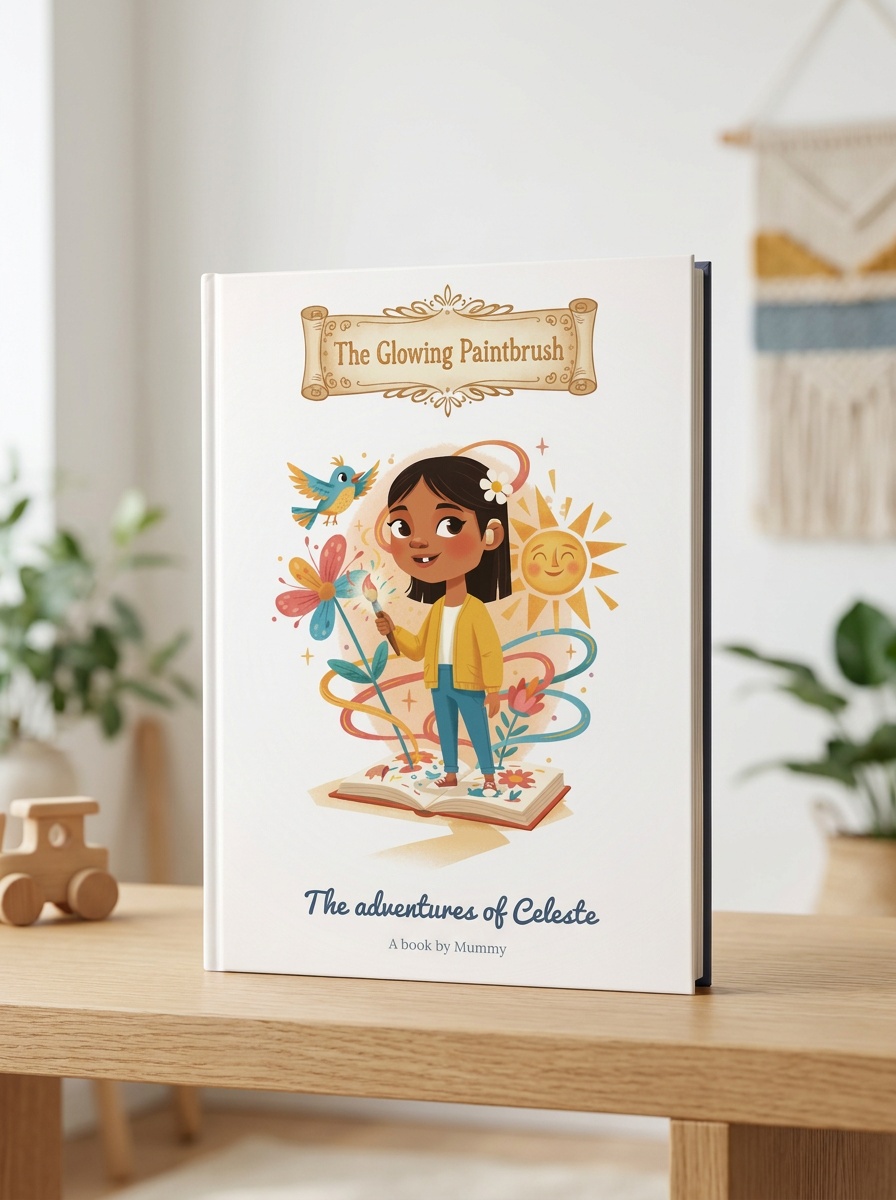
Make a book they will ask for every night
- A new story, written from scratch around them
- Their family, pets and favourite things inside
- Read a free story outline before you pay
- Change any words or pictures until it feels right
32 pages · digital £8.49 · hardback £29.99
An example book. Every title, cover and story is made for one child.
Questions parents ask
What card games can a 4 year old play?
Pairs with five or six pairs face down, slow Snap, sorting cards into red and black, and Higher or lower. Use only the cards from ace to five so the pile feels small.
What is the easiest card game for kids?
Snap and War need no choices at all, only noticing which cards match or which is higher, so most children can play from about four or five.
How do you play Beggar My Neighbour?
Split the pack between two players and take turns flipping a card into the middle. An ace or picture card means the other player must pay cards: four for an ace, three for a king, two for a queen, one for a jack. If they pay without turning up an ace or picture card, the first player takes the pile.
What card games are good for 8 year olds?
Crazy Eights, Sevens, Cheat and Clock patience all add a choice or a tactic. By nine or ten many children enjoy Rummy, Spit and simple Whist.
Are card games good for children's learning?
Yes. They practise counting, ordering numbers, memory, taking turns and losing well, all while feeling like a game rather than a lesson.