What each age can manage
- Ages 3 to 4: short turns, a spinner or a big die, and games that end in ten minutes. Matching colours and pictures. Losing is hard, so games where everyone plays together are kinder.
- Ages 5 to 6: counting spaces, simple choices, waiting for two or three other players. Racing games and memory games, where small children often beat adults.
- Ages 7 to 8: real rules and a little planning ahead. Trading, collecting sets, guessing what others hold. They start to enjoy winning by thinking, not just by luck.
- Ages 9 to 10: strategy, longer games and games with words and general knowledge. Many family games marked 8+ or 10+ on the box work well.
The age on the box is a guide. A child who loves games may manage one marked a year or two older, especially with an adult on their side.
Well-known games to look for
These are long-running games, easy to find in shops, charity shops and libraries that lend games. Ages are roughly what the boxes say.
- First games, 3 and up: Snakes and Ladders, fruit-picking games where everyone plays together, picture lotto and simple dominoes.
- Around 5 to 6: Ludo, Guess Who?, Connect 4, Junior Scrabble and Dobble, the fast spotting game that adults rarely win.
- Around 7 to 8: Labyrinth, Carcassonne, Ticket to Ride: First Journey, and Cluedo for children who like a mystery.
- Around 9 to 10: Ticket to Ride, Scrabble, chess, Monopoly with a time limit, and party games like Articulate! or Pictionary.
Games where everyone wins together
In a cooperative game the players are one team against the game: rescue the animals, catch the thief, beat the clock. They are brilliant for the youngest, for brothers and sisters who argue, and for any child who finds losing hard. Look for "cooperative" or "co-op" on the box. Play one or two alongside ordinary games, so children learn both ways.
Teaching a new game
- Read it first, alone. Learn the rules before the box is open on the table, so children are not left waiting.
- Explain the goal first: "We want to be first to the castle." Then only the rules needed for the first turn.
- Play one round open-handed, with everyone's cards showing, talking through each choice.
- Add rules as they come up. The rest can wait until the second game.
- Stop while it is fun. Half a game that ends happily beats a whole one that ends in tears.

Bright Eyed Kid
A storybook where they star on every page
Written from scratch around your child, with the people and things they love.
Fair house rules for mixed ages
- Teams. A younger child partners an adult or older sibling and rolls the die. They still feel they won.
- Head starts. The youngest starts a few spaces ahead, or the oldest plays with one hand behind their back in speed games.
- Two levels in one game. In word games, younger players can score with shorter words; in quizzes, each age gets its own questions.
- Agree the rules out loud first, especially family changes like "no money on Free Parking", so no one argues halfway through.
Losing well
- Show it. When you lose, say "Oh, so close! Well played." Children copy how adults lose more than anything they are told.
- Praise the play, not the result: "That was a clever move with the ladder."
- Do not always let them win. Small children may need a few gentle wins; from about 6, a fair game means more.
- Best of three softens a loss, and a high five at the end, whoever wins, makes it a habit.
Make your own board game
Making a game teaches more than playing one: counting, rules, fairness and storytelling all at once.
- The board: a cereal box opened flat or a big sheet of card. Draw a winding path of squares from start to finish.
- The story: where are you going, and what stands in the way? A dragon's cave, a lost cat, the way home from school.
- Special squares: "go forward 2", "miss a turn", "swap places", each with a picture.
- Counters: buttons, coins, or drawings of each player on card stood in a lump of playdough.
- Test it and change it. If it is too long, add more shortcuts. Children love being the one who writes the rules.
More ideas for game nights in kids party games and times tables games.
A game of their own story
The best homemade board games come from a story the child loves. A Bright Eyed Kid book is a new story written around your child, where they star on every page. Its places and adventures make a ready-made board: the path from the first page to the last, with the big moments as the special squares.
- About them. You answer three short questions about your child and can add a story idea of your own.
- Family alongside. Up to five co-stars, each with a photo and a name, so the people they play with can be in it too.
- Drawn so they recognise themselves, in one of four picture styles: Playful, Standard, Quirky or Classic.
- Right for their age. The writing changes for every age from 3 to 10.
- You check it first. Read a free story outline before you pay, then change any words or pictures until it feels right.
What it costs
A digital book is £8.49 and a printed hardback is £29.99, plus £2.95 delivery. Every book is 32 pages.
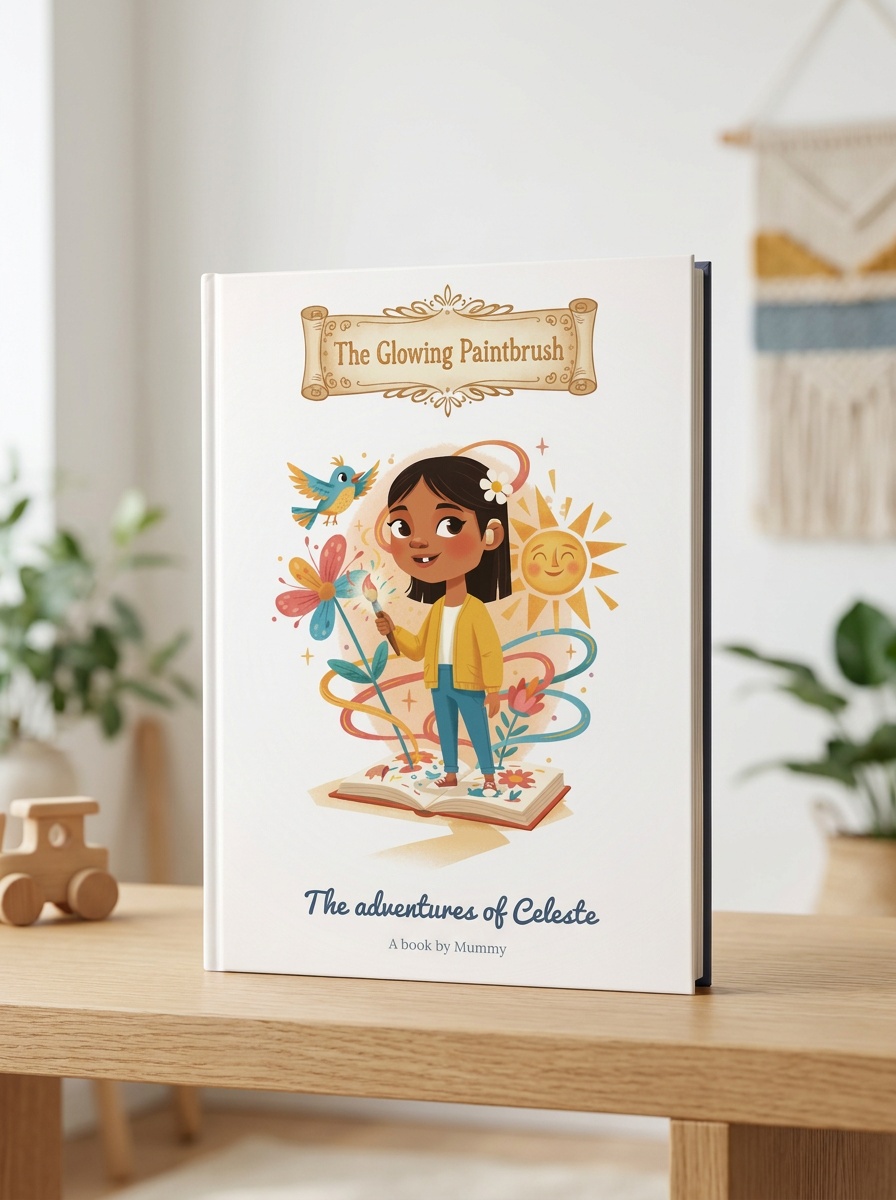
Make a book they will ask for every night
- A new story, written from scratch around them
- Their family, pets and favourite things inside
- Read a free story outline before you pay
- Change any words or pictures until it feels right
32 pages · digital £8.49 · hardback £29.99
An example book. Every title, cover and story is made for one child.
Questions parents ask
What is a good first board game for a 3 year old?
A short game with a spinner or big die, colour or picture matching, and turns that come round quickly. Cooperative games, where everyone plays together against the game, are kind at this age because no one loses alone.
What board games suit 5 to 6 year olds?
Racing and memory games, plus well-known games like Ludo, Guess Who?, Connect 4, Junior Scrabble and Dobble. Children this age can count spaces and wait for two or three other players.
How do I make board games fair for different ages?
Play in teams with a younger child partnered with an adult, give the youngest a head start, let younger players score with easier words or questions, and agree any house rules before you start.
How do I help my child cope with losing?
Show good losing yourself, praise clever moves rather than the result, play best of three, and use cooperative games where everyone wins or loses together.
How do you make your own board game with kids?
Draw a winding path on a flattened cereal box, choose a story for where the path goes, add special squares like 'go forward 2', make counters from buttons or drawings, then test it and change the rules until it plays well.