The kit
- A pack of playing cards. Take out the picture cards for younger children, so every card is a number from 1 (the ace) to 10.
- Two ordinary dice.
- A jar of real coins. Children learn money far faster by handling it.
- A clock with hands, kitchen scales, a tape measure and a pencil.
Reception (ages 4 to 5): counting and numbers to 10
Children in Reception learn to count reliably, see small amounts at a glance, and know pairs that make 5 and 10.
- Dot flash. Show a die for two seconds, hide it, ask how many dots. Seeing 3 or 4 without counting is a real skill.
- Ten in the bed. Ten teddies on a blanket. Roll a die, take off that many, count who is left.
- Pairs to ten. Lay cards face up; find two that make 10, like 7 and 3. Keep the pair.
- Stair counting. Count up the stairs and back down. Then count back from 10 and blast off at the top.
- Double trouble. Roll one die and say its double. Doubles come up again and again later.
Years 1 and 2 (ages 5 to 7): to 20, then to 100
Children learn number bonds to 20, count in 2s, 5s and 10s, split numbers into tens and ones, and start on money and time.
- Card totals. Turn two cards; the first to shout the total wins them. Then play snap when two cards make exactly 10.
- Race to a pound. Roll a die and take that many 1p coins; swap ten 1p for a 10p as you go. First to £1 wins.
- Biggest number. Each player takes two cards and makes the largest two-digit number: 6 and 3 make 63, not 36. Highest wins the round.
- Shop. Price toys at 5p to 20p with sticky notes; children pay with real coins and work out the change.
- What time is it, Mr Wolf? The wolf answers with a real clock time: o'clock, then half past, then quarter past.
Years 3 and 4 (ages 7 to 9): bigger numbers and fractions
Children work with numbers to 1,000 and beyond, add and take away in columns, learn fractions, and read clocks including 24-hour times. Times tables are a big part of these years; there is a full guide in times tables games.
- Target 100. Deal four cards; add and take away to get as close to 100 as you can. Closest wins.
- Three-digit war. Each player turns three cards and arranges them into the biggest number possible. Next round, play for the smallest.
- Pizza fractions. Cut a real pizza or a paper one. Would you rather have a half or three-eighths? Why?
- Timetable detective. Read a real bus or train timetable together. How long is the journey? What time do we arrive?
- Roman numerals hunt. Spot them on clocks, old buildings and the end of films. Year 4 learns them to 100.

Bright Eyed Kid
A storybook where they star on every page
Written from scratch around your child, with the people and things they love.
Years 5 and 6 (ages 9 to 11): decimals, percentages and thinking ahead
Children work with decimals, percentages, negative numbers and longer problems. Year 6 sits the national tests (SATs) in May.
- Countdown numbers. Pick six cards and roll three dice for a three-digit target. Use any operations to reach it.
- Sale shopper. A pretend £20 and a shop's offers: 25% off, three for two. Which is the best deal?
- Freezing and thawing. On a winter morning, how many degrees is it from minus 3 to 5?
- Yahtzee and Pig. Dice games where you weigh the risk of another roll. Chance and probability without the words.
- Plan the day out. Budget, travel time and the order of things. Hand the sums over to them.
Maths hidden in the day
- Cooking: weighing flour, doubling a recipe, cutting a cake into eighths. See baking with kids.
- Shopping: "We have £5. Can we buy all three?" Let them hand over the money.
- In the car: add up the digits on a number plate, guess how many minutes until the next town.
- At the table: share out grapes fairly, count the knives and forks for everyone.
- Pocket money: saving for something and counting how many weeks it will take.
Keeping maths fun
- Little and often. Ten minutes of a game beats an hour of a worksheet.
- Say "let's work it out together" rather than "I was never any good at maths". Children copy how we talk about it.
- Ask how, not just what. "How did you get that?" teaches more than "right" or "wrong".
- Let them win sometimes, and let them catch you making a mistake on purpose.
- Ask the school. Teachers will tell you the methods they use, so games at home match the classroom.
More ideas in board games for kids and kids quiz questions.
A story where the sums matter
Maths sticks when it is part of a story: sharing out treasure, counting down to a launch, working out the way home. A Bright Eyed Kid book is a new story written around your child, where they star on every page. A story idea of your own, such as solving a number puzzle to save the day, puts the maths in their hands.
- About them. You answer three short questions about your child and can add a story idea of your own.
- Family alongside. Up to five co-stars, each with a photo and a name.
- Drawn so they recognise themselves, in one of four picture styles: Playful, Standard, Quirky or Classic.
- Right for their age. The writing changes for every age from 3 to 10.
- You check it first. Read a free story outline before you pay, then change any words or pictures until it feels right.
What it costs

A digital book is £8.49 and a printed hardback is £29.99, plus £2.95 delivery. Every book is 32 pages.
Make a book they will ask for every night
- A new story, written from scratch around them
- Their family, pets and favourite things inside
- Read a free story outline before you pay
- Change any words or pictures until it feels right
32 pages · digital £8.49 · hardback £29.99
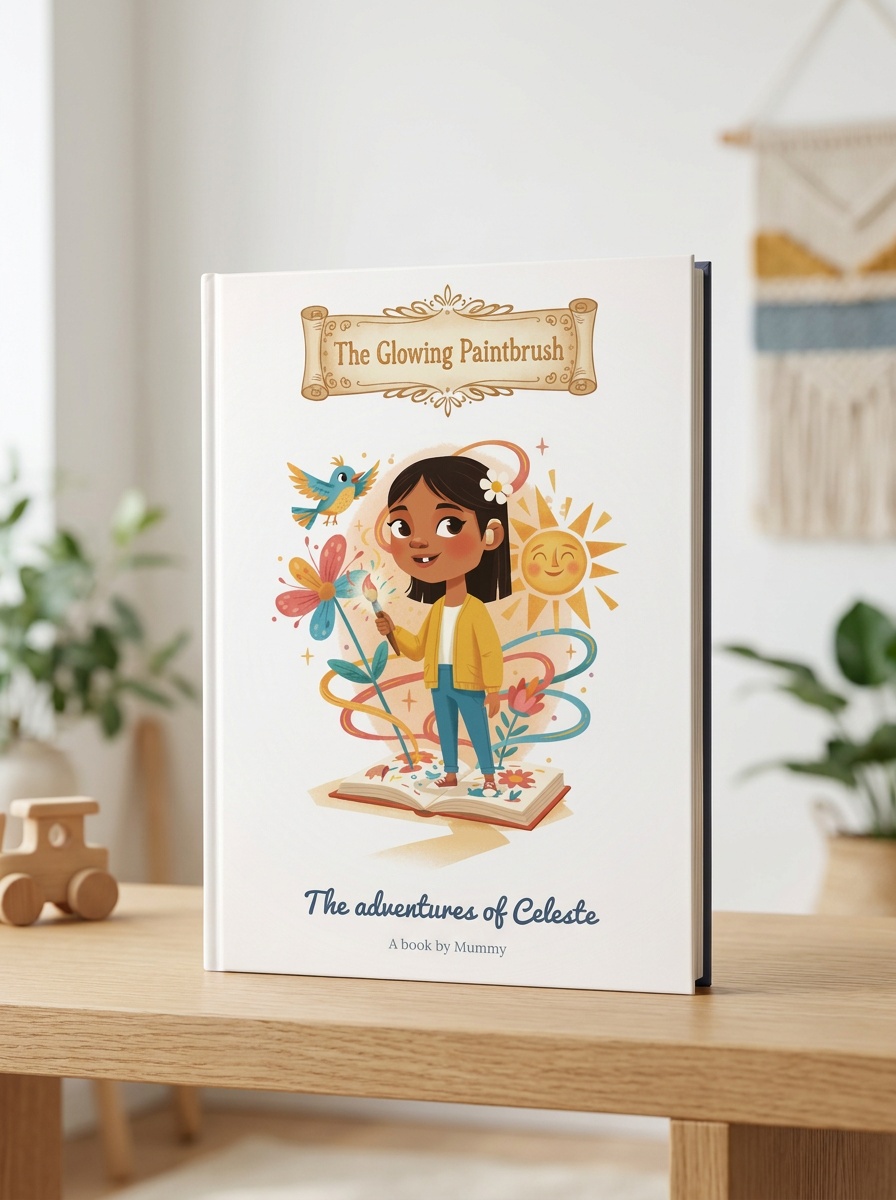
An example book. Every title, cover and story is made for one child.
Questions parents ask
What maths games can I play at home with my child?
Card and dice games cover most of primary maths: pairs to ten with cards, a race to £1 with coins and a die, making the biggest number from cards, Target 100, and shop games with real money.
What maths do children learn in Reception?
Counting reliably, seeing small amounts at a glance, numbers to 10, pairs that make 5 and 10, and doubles. Games like dot flash and pairs to ten practise all of these.
How can I help my child with maths without worksheets?
Use everyday life: weighing in the kitchen, paying in shops, timetables, the weather and pocket money. Ten minutes of a game a few times a week works better than long sessions.
What maths games suit Year 5 and 6?
Countdown-style number games, working out sale prices and percentages, temperatures below zero, planning a day out on a budget, and dice games like Yahtzee that teach risk and chance.
How do I help a child who thinks they are bad at maths?
Keep it short and playful, ask how they worked it out rather than only checking the answer, talk positively about maths yourself, and let them catch you making mistakes.