The method: guess, try, tell
Schools in England teach children to work scientifically: ask a question, predict, test fairly and say what happened. At home it can be three words.
- Guess. "What do you think will happen?" Write it down or draw it. A wrong guess is the best kind; it is where the surprise is.
- Try. Do it, and watch closely. Take a photo before and after.
- Tell. "What happened? Why do you think?" Then read them the one-line explanation below.
From about seven, add a fair test: change one thing only. Two cups, same water, different temperature. That single idea is the heart of science.
Why does it fizz?
- Volcano. Two spoons of bicarbonate of soda in a cup, a squeeze of washing-up liquid and a drop of food colouring, then pour in vinegar. The science: the acid in vinegar reacts with the bicarbonate and makes carbon dioxide gas, and the gas makes the bubbles.
- Balloon blower. Bicarbonate inside a balloon, vinegar in a bottle; stretch the balloon over the neck and tip the powder in. The science: the same gas has nowhere to go, so it fills the balloon.
- Dancing raisins. Drop raisins into a glass of fizzy water. The science: bubbles cling to the wrinkly raisins and lift them; at the top the bubbles pop and the raisins sink again.
Why does it float?
- Sink or float. A washing-up bowl and ten things from round the house: an apple, a coin, a cork, a grape, a toy car. Guess each one first. The science: things float when they are lighter than the water they push out of the way.
- Floating egg. An egg sinks in tap water. Stir in salt, spoon by spoon, until it floats. The science: salty water is heavier than fresh water, so it pushes up harder. It is why people float more easily in the sea.
- Rainbow layers. In a tall glass, slowly pour honey, then washing-up liquid, then water with food colouring, then oil. The science: the heaviest liquids for their size sink to the bottom and the lightest stay on top.
Where does the colour go?
- Rainbow milk. Full-fat milk in a plate, drops of food colouring, then touch the middle with a cotton bud dipped in washing-up liquid. The science: the soap breaks up the fat in the milk and pulls the surface apart, carrying the colours with it.
- Walking water. A row of glasses, every other one with coloured water, linked by folded kitchen roll. Leave it a few hours. The science: water climbs through the tiny gaps in paper, and blue and yellow meet in the empty glass to make green.
- Red cabbage detective. Chop red cabbage, cover with hot water (an adult job), cool and strain. Add lemon juice to one cup and bicarbonate to another. The science: the purple juice turns pink with acids and blue or green with alkalis, so it tells you which is which.
- Felt tip secrets. A dot of black felt tip near the bottom of a strip of kitchen roll, the end dipped in water. The science: black ink is often a mix of colours, and water carries each one a different distance.
Living things
- Cress heads. Cotton wool in an eggshell, sprinkle cress seeds, keep damp. Hair in about a week. Put one in a dark cupboard and compare. The science: plants need light to make their food and turn green.
- Bendy celery. A celery stick with leaves in coloured water overnight. The science: plants drink up water through thin tubes in the stem, and the colour shows the way.
- Bean in a jar. A broad bean against the glass with damp kitchen roll behind it, so you can watch the root go down and the shoot go up.
- Mouldy bread. One slice touched with clean hands and one with unwashed hands, in sealed bags. Look, do not open. The science: the case for washing hands, grown on bread.
Bright Eyed Kid
A storybook where they star on every page
Written from scratch around your child, with the people and things they love.
Pushes, pulls and air
- Balloon rocket. Thread a straw onto string tied across a room, tape a blown-up balloon to the straw and let go. The science: air rushes out one way and pushes the balloon the other.
- Static hair. Rub a balloon on a jumper, then hold it near hair or tiny bits of paper. The science: rubbing moves tiny charges onto the balloon, and opposite charges pull towards each other.
- Paper helicopter. Cut and fold a strip of paper with two blades, add a paper clip at the bottom and drop it from the stairs. Then try longer blades. A fair test in one afternoon.
- Melting race. Ice cubes on a plate, on a towel, in salt, in the sun. Which melts first? The science: heat moves into the ice faster from some places than others, and salt lowers the temperature at which ice melts, which is why it goes on winter roads.
- Magnet hunt. Which things in the kitchen does a fridge magnet stick to? Not all metals are magnetic: it will not stick to foil or a drinks can.
By age
- Ages 3 to 5. Sink or float, ice melting, the volcano, cress heads. Big visible changes, lots of pouring, one question at a time.
- Ages 6 to 7. Walking water, rainbow milk, the bean in a jar, the magnet hunt. Start drawing a before-and-after picture.
- Ages 8 to 10. Red cabbage, the floating egg, paper helicopters and fair tests. Let them write the method and run it for the family. More facts to explore in fun facts for kids.
Staying safe and tidy
- An adult handles hot water, knives and anything near eyes.
- Nothing from an experiment gets eaten or drunk unless it was food to start with.
- Do fizzy ones on a tray or outside; keep a cloth ready.
- Wash hands afterwards, and keep sealed mould bags sealed when they go in the bin.
The kitchen is a lab on any wet afternoon: see rainy day activities for kids and baking with kids, where rising cakes are chemistry too.
A story where they make the discovery
Children who love asking why often love a story where they are the one who works it out. A Bright Eyed Kid book is a new story written around your child, where they star on every page. A story idea of your own, such as an inventor who fixes the town clock or a scientist who finds out why the river turned purple, puts their curiosity at the centre.
- About them. You answer three short questions about your child and can add a story idea of your own.
- Family alongside. Up to five co-stars, each with a photo and a name, so a brother or sister can come along as lab assistant.
- Drawn so they recognise themselves, in one of four picture styles: Playful, Standard, Quirky or Classic.
- Right for their age. The writing changes for every age from 3 to 10.
- You check it first. Read a free story outline before you pay, then change any words or pictures until it feels right.
What it costs
A digital book is £8.49 and a printed hardback is £29.99, plus £2.95 delivery. Every book is 32 pages.
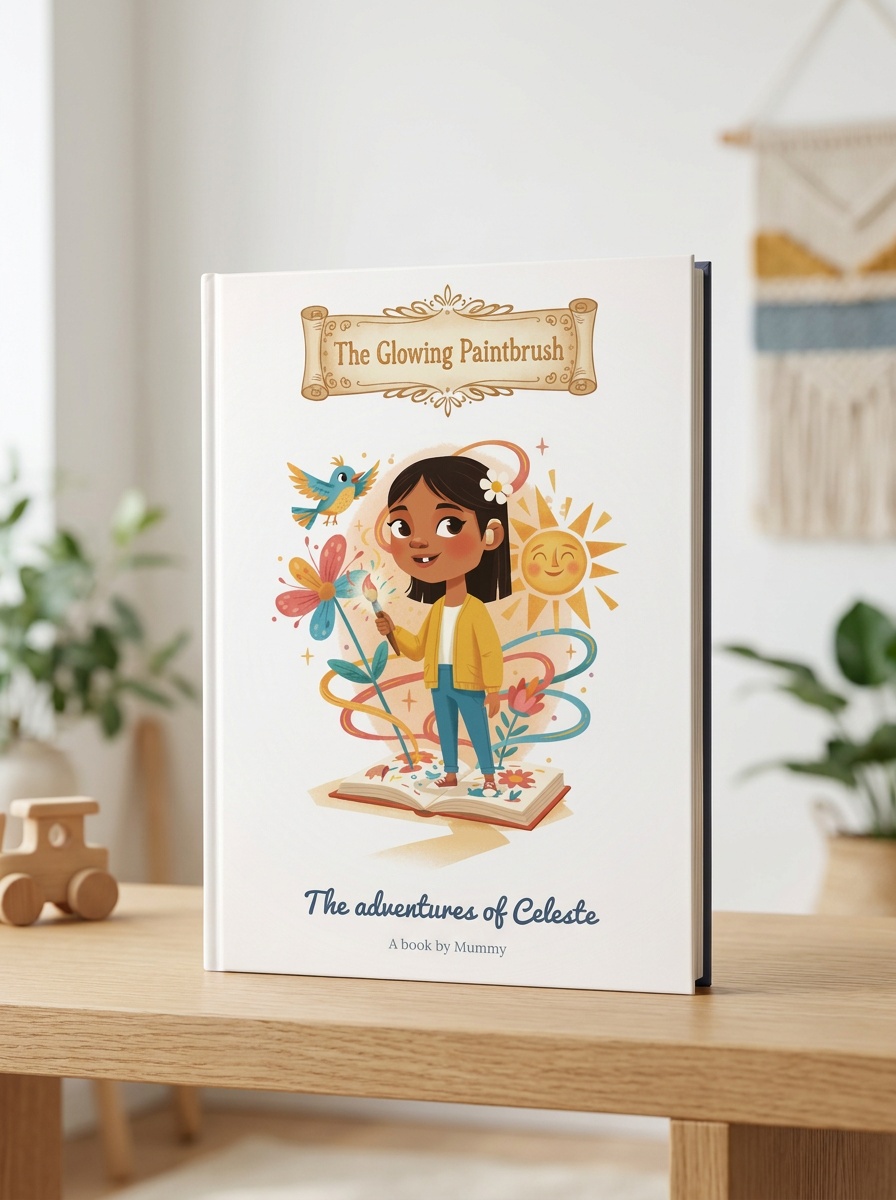
Make a book they will ask for every night
- A new story, written from scratch around them
- Their family, pets and favourite things inside
- Read a free story outline before you pay
- Change any words or pictures until it feels right
32 pages · digital £8.49 · hardback £29.99
An example book. Every title, cover and story is made for one child.
Questions parents ask
What are easy science experiments for kids at home?
A bicarbonate and vinegar volcano, sink or float, dancing raisins in fizzy water, rainbow milk, walking water with kitchen roll, and cress grown in an eggshell. All use things most kitchens already have.
What science experiments suit a 4 year old?
Big, visible changes with lots of pouring: sink or float with household objects, melting ice, the fizzing volcano and growing cress. Ask one question at a time and let them guess first.
How do you explain the vinegar and bicarbonate of soda experiment?
Vinegar is an acid and bicarbonate of soda is an alkali. When they meet they react and make carbon dioxide gas, which makes the bubbles.
What is a fair test for kids?
A test where you change only one thing and keep everything else the same, such as two paper helicopters that differ only in blade length. Schools in England teach it from about seven.
Are kitchen science experiments safe?
Yes, with an adult handling hot water and knives, nothing eaten unless it was food to start with, fizzy experiments done on a tray, and hands washed afterwards.