Which slime for which age

- Ages 2 to 4: cornflour goo or taste-safe slime. Both are made from food cupboard ingredients.
- Ages 5 to 7: glue slime with an adult measuring the activator, and hands washed afterwards.
- Ages 8 to 10: glue slime start to finish with an adult nearby, plus their own colours, textures and experiments.
Stretchy glue slime
The classic. It works because the activator links the long molecules in PVA glue together, turning a runny liquid into something you can stretch and poke.
- about 120 ml white PVA glue (a small school bottle, or half a mug)
- half a teaspoon bicarbonate of soda
- 1 tablespoon contact lens saline solution, from a chemist or supermarket
- gel food colouring
- Pour the glue into a bowl and stir in the colouring and the bicarbonate of soda.
- Add the saline solution and stir. Within a minute it starts pulling away from the sides of the bowl.
- Take it out and knead it with your hands for two or three minutes. It feels sticky at first and firms up as you knead.
The saline must list boric acid or sodium borate in its ingredients, or the slime will not set. That small amount is what does the work borax powder used to do, so an adult keeps the bottle and does the measuring.
Fluffy, clear and crunchy versions
- Fluffy: stir in a few big squirts of shaving foam before the saline. Soft, light and good for squeezing; it goes flat after a day or two.
- Clear: use clear PVA glue and no colouring, and leave it in a tub for a couple of days for the bubbles to rise out. Glass-like when it settles.
- Crunchy: knead in small foam beads once the slime is made.
- Butter slime: knead in a lump of soft modelling clay for a thick, spreadable slime.
Cornflour goo (no glue, from age two)
- 1 mug cornflour
- about half a mug of water, with a drop of colouring
Stir the water slowly into the cornflour on a tray. It goes hard when you squeeze or tap it and runs like a liquid when you let go. Children can punch it and then watch it drip through their fingers. It washes off hands and most clothes with water. Do not pour it down the sink: let it dry out and put it in the bin.
Taste-safe slime for toddlers
- Cornflour and oil: knead 2 parts cornflour with 1 part sunflower oil for a soft, mouldable dough-slime.
- Jelly slime: make a packet of jelly with less water than it says, let it set, then mash and squish. Add toy animals to rescue.
- Chia seed slime: soak chia seeds in water overnight, then stir in a spoonful of cornflour until it holds together.
Taste-safe means a nibble will not hurt. It is still play, not a snack, and anyone with a food allergy should check every ingredient.

Bright Eyed Kid
A storybook where they star on every page
Written from scratch around your child, with the people and things they love.
When it goes wrong
- Too sticky: knead longer, then add a few more drops of saline at a time. Oiling hands first helps.
- Too rubbery and snapping: too much activator. Knead in a teaspoon of glue or a little hand lotion.
- Never sets: check the saline has boric acid or sodium borate in it; many plain saline sprays do not.
- Dried out after a few days: knead in a few drops of warm water.
- In hair or on clothes: white vinegar loosens glue slime, then wash as usual. Cooking oil works on hair.
Storing and safety
- Glue slime keeps about a week in an airtight tub. Throw it away if it smells, grows spots or gets dirty.
- Wash hands before and after, and cover cuts or sore skin, as some children's skin is sensitive to activators.
- Glue slime is not for children who still mouth things, and keep every kind away from pets.
- Avoid recipes that use washing detergent or laundry products as the activator: they vary between brands and are harder on skin.
Turn it into a science lesson
- Is slime a liquid or a solid? Pour it, then pull it fast and slow, and see what it does.
- Make two batches with different amounts of saline and compare how far each stretches before it snaps.
- Does warm slime stretch further than slime from the fridge? Guess first, then test.
- More hands-on questions in science experiments for kids, and more making in kids crafts.
A story where they star
Children who love slime tend to love a good mess in a story too: a slime that escapes from the kitchen, a goo that grows overnight. A Bright Eyed Kid book is a new story written around your child, where they star on every page and are the one who saves the day.
- About them. You answer three short questions about your child and can add a story idea of your own.
- Family alongside. Up to five co-stars, each with a photo and a name, so the cousin who helped make the slime can join in.
- Drawn so they recognise themselves, in one of four picture styles: Playful, Standard, Quirky or Classic.
- Right for their age. The writing changes for every age from 3 to 10.
- You check it first. Read a free story outline before you pay, then change any words or pictures until it feels right.
What it costs
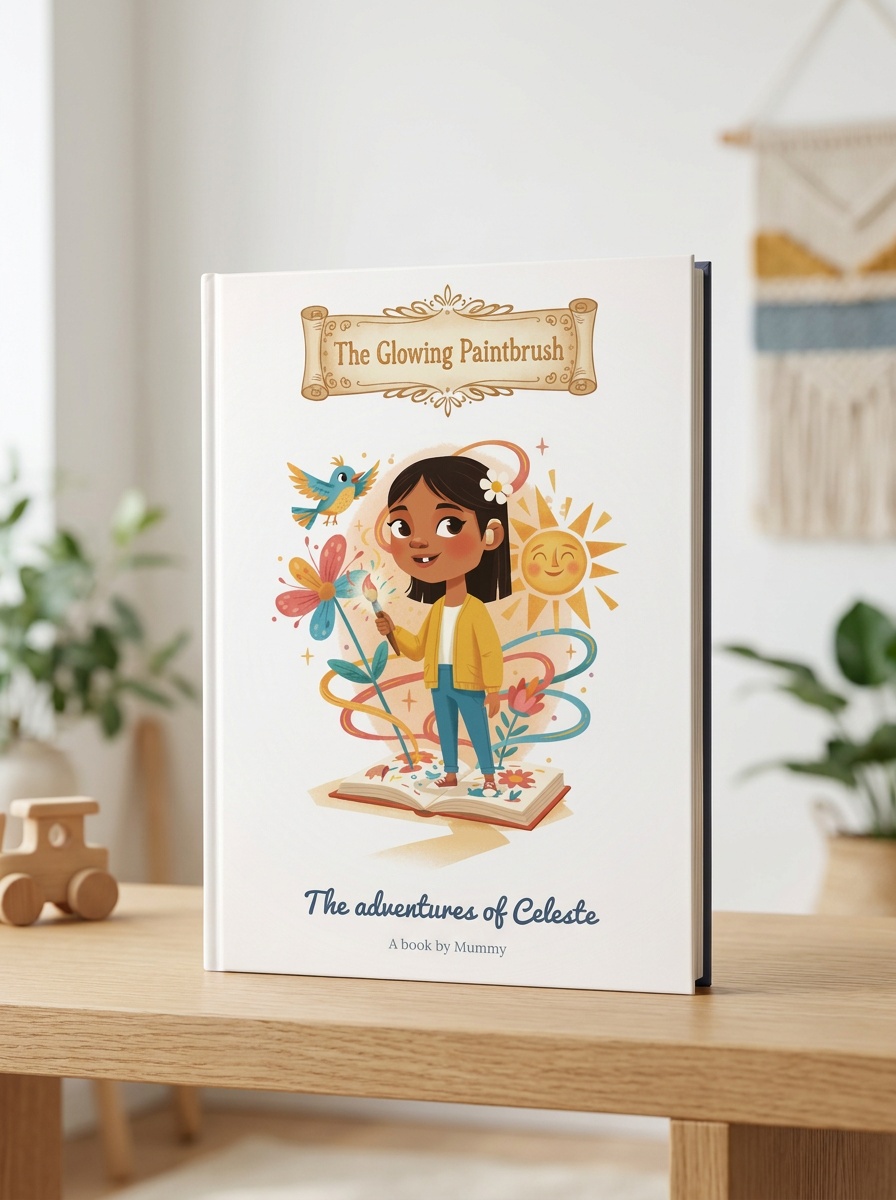
A digital book is £8.49 and a printed hardback is £29.99, plus £2.95 delivery. Every book is 32 pages.
Make a book they will ask for every night
- A new story, written from scratch around them
- Their family, pets and favourite things inside
- Read a free story outline before you pay
- Change any words or pictures until it feels right
32 pages · digital £8.49 · hardback £29.99
An example book. Every title, cover and story is made for one child.
Questions parents ask
How do you make slime without borax?
Mix about 120 ml of PVA glue with half a teaspoon of bicarbonate of soda and some colouring, then stir in a tablespoon of contact lens saline that lists boric acid or sodium borate, and knead until it stops sticking.
How do you make slime without glue?
Stir about half a mug of water slowly into a mug of cornflour. The goo goes hard when squeezed and runs when you let go. It works from age two and washes off with water.
Why is my slime still sticky?
It usually needs more kneading. If it is still sticky after a few minutes, add a few more drops of saline at a time, and oil your hands first.
Is homemade slime safe for kids?
Glue slime is fine for school-age children with an adult measuring the activator, hands washed before and after, and no eating. Toddlers should use cornflour goo or a taste-safe slime instead.
How long does homemade slime last?
Glue slime keeps about a week in an airtight tub. Throw it away if it smells, shows spots or gets dirty.