A craft box that lasts all year

- Keep: cereal boxes, loo roll and kitchen roll tubes, egg boxes, bottle tops, jar lids, clean yoghurt pots, wrapping paper scraps, ribbon, old magazines.
- Buy once: PVA glue, a glue stick, child scissors, sticky tape, masking tape, a hole punch, poster paints, felt tips, card and a few pipe cleaners.
- Cover the table: an old shower curtain or a cut-open bin bag, and an apron made from an old shirt worn backwards.
- A shoebox per child for their unfinished projects stops arguments and lets a craft carry on tomorrow.
From the recycling
- Loo roll animals. Paint a tube, fold the top in to make two ears, add a face: an owl, a cat, a rabbit. A row of them becomes a family of characters for a play.
- Egg box creatures. Cut single cups for ladybirds and a strip of six for a caterpillar. Pipe cleaners make legs and feelers.
- Cereal box city. Turn boxes inside out so the plain side faces out, draw windows and doors, and line them up along the floor with a road made of masking tape.
- Bottle top pictures. Glue tops onto card to make a caterpillar, a flower or a robot face. Sorting them by colour first is half the fun for little ones.
- Junk model robot. A box body, tube arms, lids for buttons and dials, foil for the shiny bits. Give the robot a name and a job.
From paper and card
- Paper plate faces. Masks, lions with torn-paper manes, a clock with split-pin hands.
- Paper weaving. Cut slits in a folded sheet, leaving a border, then weave strips of another colour over and under. Magazine strips look striking.
- Paper chains and concertina people. Fold a strip back and forth, draw half a person touching both edges, cut, and open out a row holding hands.
- Collage portraits. Tear coloured pages from old magazines to make a face: hair, eyes, a jumper. Tearing is easier than cutting for small hands.
- Origami. A fortune teller, a jumping frog, a paper boat that really floats in the bath. Good from about seven.
From the kitchen
- Salt dough. One mug of plain flour, half a mug of salt and about half a mug of water. Make handprints, hanging shapes or tiny models, bake low (around 100°C) for two to three hours until hard, then paint. Salt dough is not for eating, and keep it away from pets.
- Playdough. Ten minutes to make and weeks of play; recipes and fixes in our playdough recipe guide.
- Pasta necklaces. Thread tube pasta on wool with a strip of tape wrapped round the end as a needle. Paint the pasta first.
- Potato prints. An adult cuts a simple shape into half a potato; the child dips it in paint and stamps. Wrapping paper made this way is a gift in itself.
- Kitchen roll butterflies. Felt tip dots, a drip of water and watch the colours spread, then pinch the middle with a peg.
From the garden and a walk
- Pebble painting. Smooth pebbles become ladybirds, faces or a set of story stones: draw a character, a place and an object on each and pick three to tell a story.
- Leaf rubbings. Put a leaf under thin paper and rub over it with the side of a crayon.
- Stick people and stick frames. Wrap wool round sticks to make figures, or tie four sticks into a frame for a drawing.
- Nature collage. Stick petals, leaves and seeds onto the sticky side of clear tape on card. Pick only from the ground.

Bright Eyed Kid
A storybook where they star on every page
Written from scratch around your child, with the people and things they love.
What each age can do on their own
- Ages 3 to 4. Tearing, sticking with a glue stick, printing, painting big shapes, threading big beads or pasta. The making matters more than the result, so leave them to it.
- Ages 5 to 6. Cutting along a straight line, simple folding, junk models with help on the tape. They start to plan before they make.
- Ages 7 to 8. Cutting curves, weaving, simple origami, salt dough models, following written steps with a little help.
- Ages 9 to 10. Longer projects over several days: a model with moving parts, a hand-sewn felt toy, a book they write and bind. Let them choose the project and only help when asked.
Keeping it calm
- Set out one craft at a time, with only the materials it needs.
- Make one yourself alongside them rather than finishing theirs.
- Ask "tell me about it" instead of "what is it?"
- Build tidying into the craft: the last step is putting the lids on.
- For wet weekends, more ideas in rainy day activities for kids; for December, Christmas crafts for kids.
Crafts about the child who makes them
- A self-portrait each birthday, drawn or collaged, dated on the back. Kept in one folder, they show a child growing up.
- A handprint calendar with a handprint turned into something different for each month.
- A box about me: decorate a shoebox and fill it with drawings of favourite things, a photo, and a note about what they want to be.
- A book of their own. Fold four sheets in half, staple the spine, and let them write and draw a story where they are the main character.
A finished book where they star
Children who make their own books often love to hold one that looks like a real book from a shop, with them inside. A Bright Eyed Kid book is a new story written around your child, where they star on every page. Their own craft ideas make good story ideas: a robot made of cereal boxes that comes to life, or a town of loo roll people who need their help.
- About them. You answer three short questions about your child and can add a story idea of your own.
- Family alongside. Up to five co-stars, each with a photo and a name, so the sister who shares the craft box can join in.
- Drawn so they recognise themselves, in one of four picture styles: Playful, Standard, Quirky or Classic.
- Right for their age. The writing changes for every age from 3 to 10.
- You check it first. Read a free story outline before you pay, then change any words or pictures until it feels right.
What it costs

A digital book is £8.49 and a printed hardback is £29.99, plus £2.95 delivery. Every book is 32 pages.
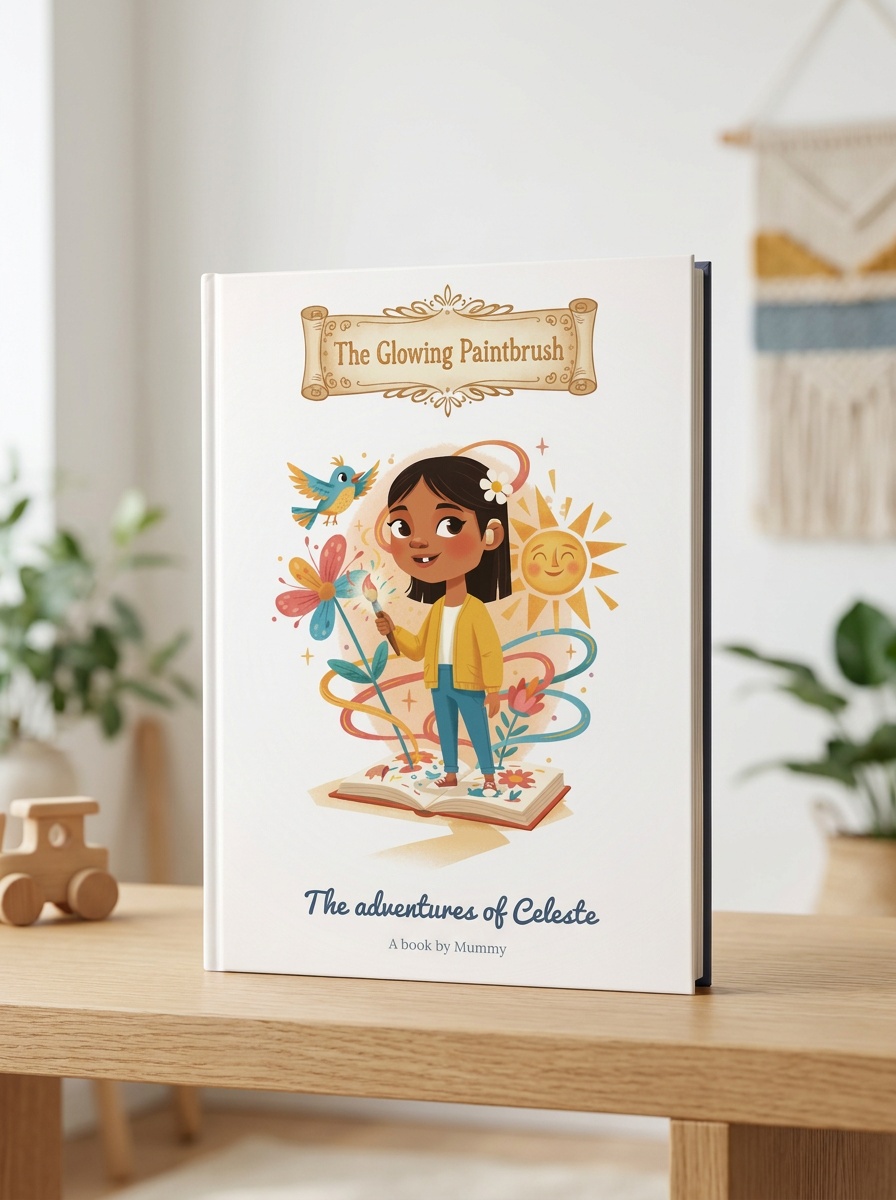
Make a book they will ask for every night
- A new story, written from scratch around them
- Their family, pets and favourite things inside
- Read a free story outline before you pay
- Change any words or pictures until it feels right
32 pages · digital £8.49 · hardback £29.99
An example book. Every title, cover and story is made for one child.
Questions parents ask
What are easy crafts for kids at home?
Loo roll animals, egg box caterpillars, paper plate masks, potato prints, salt dough handprints and pebble painting all use things most homes already have.
What crafts can a 3 year old do?
Tearing paper for a collage, sticking with a glue stick, printing with potatoes or sponges, painting big shapes and threading pasta onto wool. Let them do it their way; the making matters more than the result.
What crafts suit 8 to 10 year olds?
Weaving, origami, salt dough models, hand-sewn felt toys, models with moving parts and making and binding their own book. Let them choose and plan the project.
How do you make salt dough?
Mix one mug of plain flour with half a mug of salt and about half a mug of water into a dough. Shape it, bake it low at around 100°C for two to three hours until hard, then paint it. It is not for eating and should be kept away from pets.
What should be in a kids craft box?
Clean recycling such as boxes, tubes and egg boxes, plus PVA glue, a glue stick, child scissors, tape, paints, felt tips, card and pipe cleaners.