What you need

- A4 printer paper. Thin paper flies better than card; newspaper is too floppy.
- A hard, flat table for folding, and a thumbnail or the back of a spoon to make sharp creases.
- Sticky tape and a paper clip for fixes.
- Felt tips to decorate, and space: a hallway, the garden on a still day or a park.
1. The classic dart (easiest)
- Fold the A4 sheet in half the long way, crease, and open it again.
- Fold the two top corners in so their edges meet the centre crease. It now looks like a house.
- Fold the two new slanted edges in to the centre crease again, making a sharper point.
- Fold the whole plane in half along the centre crease, with the folds on the outside.
- Fold each side down to make a wing, lining the wing edge up with the bottom of the plane.
- Open the wings so they sit level with each other. Throw it gently, straight and slightly up.
The dart is fast and goes straight. It is the one to learn first.
2. The glider (slow and floaty)
- Fold the sheet in half the long way and open it.
- Fold the top corners in to the centre crease, as for the dart.
- Fold the whole point down so its tip touches the bottom of the slanted edges, making a flat top.
- Fold the new top corners in to the centre crease.
- Fold the small triangle tip up over those corners to lock them down.
- Fold in half, then fold wide wings, leaving a short body underneath.
Wide wings and a blunt nose make it float. Throw it softly; it rewards a gentle hand.
3. The long-nose plane (for distance)
- Make steps 1 to 3 of the dart.
- Fold the point back by about two fingers' width, then fold it forward again, so the nose is heavier.
- Fold in half and fold narrow wings.
- Fold a small flap up at the outer edge of each wing, about a finger wide, to help it fly straight.
The extra weight at the front lets it be thrown harder. Good for distance contests from age seven.
4. The hoop plane (no wings at all)
- Cut a strip of paper the long way, about three fingers wide, and a second strip half as wide.
- Curl each strip into a loop and tape it, making a big hoop and a small hoop.
- Tape the hoops to each end of a drinking straw, both on the same side.
- Hold the straw in the middle, small hoop at the front, and throw it like a dart.
It looks as if it cannot fly, and then it does. Children love showing this one to adults.

Bright Eyed Kid
A storybook where they star on every page
Written from scratch around your child, with the people and things they love.
Which folds suit each age
- Ages 3 to 4: you fold, they decorate and throw. They can press creases flat with their hand. Expect short, joyful flights; their throw is still more of a push.
- Ages 5 to 6: they can fold the dart with you folding alongside, step for step. Lining corners up to a crease is the hard part, so show them first.
- Ages 7 to 8: the dart and glider on their own, and the hoop plane with help on the cutting. Start comparing which flies further and why.
- Ages 9 to 10: all four, plus designing their own. Set a challenge: furthest flight, longest time in the air, or landing on a target.
If it dives, climbs or turns
- Nose-dives: bend the back edge of both wings up slightly, a few millimetres, or throw more gently.
- Climbs, stalls and drops: bend the back edges down a little, or add a paper clip to the nose.
- Turns to one side: check both wings are the same size and level. Bend the back edge of one wing a touch to steer it the other way.
- Floppy and wobbly: the creases are soft. Run a thumbnail along every fold, and tape the body shut under the wings.
Flying games
- Distance contest: a line to throw from and a coat or a tape measure to mark each landing.
- Time in the air: one throws, one counts. Gliders win this one.
- Target landing: a washing basket, a hula hoop or a chalk circle, with points for each.
- Through the hoop: an adult holds a hula hoop up and they fly through it from further and further back.
- Airport: a runway of tape on the floor, a control tower from a box, and every plane needs a name and a destination.
The science bit
- Lift is the push up from the air under the wings. Wider wings give more lift, which is why the glider floats.
- Drag is the air pushing back. A narrow, pointed plane has less drag, so the dart goes faster.
- Thrust comes from their arm, and gravity brings every plane down in the end.
- Change one thing at a time and write down the results, and it is a real experiment. More in science experiments for kids.
A story where they take off
A child watching their own plane cross the room is already imagining where it is going. A Bright Eyed Kid book is a new story written around your child, where they star on every page, so the pilot in their head can become the one in the pictures.
- About them. You answer three short questions about your child and can add a story idea of your own, such as flying somewhere new.
- Family alongside. Up to five co-stars, each with a photo and a name.
- Drawn so they recognise themselves, in one of four picture styles: Playful, Standard, Quirky or Classic.
- Right for their age. The writing changes for every age from 3 to 10.
- You check it first. Read a free story outline before you pay, then change any words or pictures until it feels right.
What it costs
A digital book is £8.49 and a printed hardback is £29.99, plus £2.95 delivery. Every book is 32 pages.
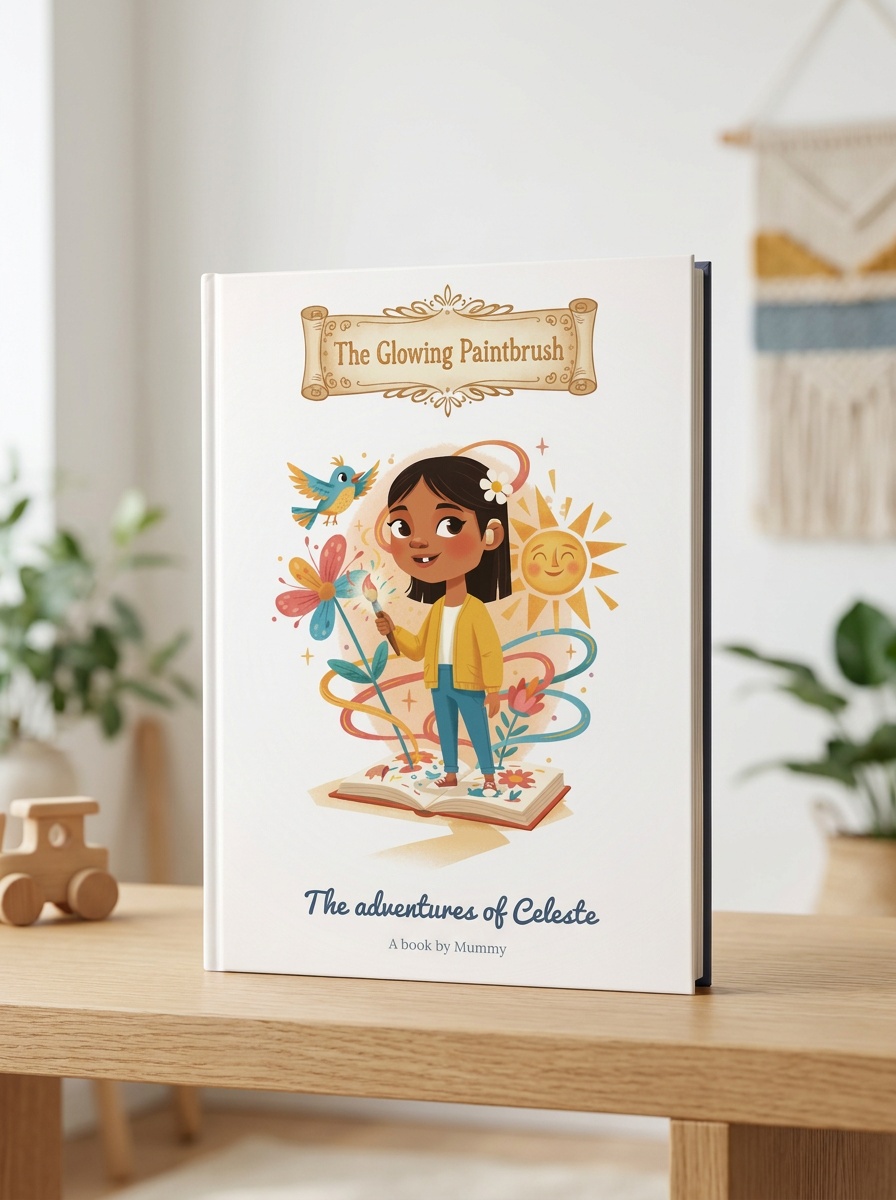
Make a book they will ask for every night
- A new story, written from scratch around them
- Their family, pets and favourite things inside
- Read a free story outline before you pay
- Change any words or pictures until it feels right
32 pages · digital £8.49 · hardback £29.99
An example book. Every title, cover and story is made for one child.
Questions parents ask
What is the easiest paper aeroplane for kids?
The classic dart. Fold A4 in half the long way, fold the top corners to the centre twice, fold in half and fold down the wings. Most seven year olds can do it alone.
What age can kids make paper aeroplanes?
Three and four year olds can decorate and throw a plane an adult folds. From five they can fold a dart alongside you, and by seven most fold one on their own.
Why does my paper aeroplane nose-dive?
The nose is too heavy or the throw too hard. Bend the back edges of both wings up by a few millimetres and throw it more gently.
What paper is best for paper aeroplanes?
Ordinary A4 printer paper. Card is too heavy and newspaper too floppy.
Which paper aeroplane flies the furthest?
A narrow plane with a heavier nose, like the long-nose dart, flies furthest when thrown hard. A wide-winged glider stays in the air longest.