What you need

- Plain paper, lots of it. Printer paper or the back of old letters is fine; a roll of lining paper taped to the floor is better.
- Chunky crayons and washable felt tips for little hands; soft pencils, a rubber and fine pens for older ones.
- A sketchbook of their own from about six, so they can see how their drawing changes.
Ages 3 to 4: marks, shapes and stories
- Scribble hunt. They scribble with one crayon; you look for a shape hiding in it together and colour it in.
- Draw to music. Fast music for spiky lines, slow music for swirls.
- Add a face. Draw circles and let them turn each one into a person, an animal or a sun.
- Hand tracing. Draw round their hand and turn it into a tree, a bird or a family of finger people.
- Tell me as you go. Many children this age draw a story, not a picture. Write down what they say underneath.
Ages 5 to 6: people, places and favourite things
- Their family, including the pets, all doing something together.
- The view from their window, then the same view at night.
- A map of their bedroom, their street or a made-up island with treasure.
- A monster made from three shapes: a triangle body, square eyes, circle feet.
- Their favourite meal on a paper plate.
- Half a picture: you draw half a face or a house, and they finish it.
Ages 7 to 8: imagination with a twist
- An animal mixed with another animal: a giraffe-fish, an elephant-bird. Then give it a name.
- Their house if it were a castle, a spaceship or a treehouse.
- Themselves as a grown-up, at work.
- A machine that does their least favourite job.
- Draw what is inside: a backpack, a dragon's cave, a pocket.
- Four boxes, one for each season, showing the same tree.
Ages 9 to 10: skill and stories
- A comic strip of six boxes with a beginning, a problem and an ending.
- Drawing from life: a shoe, a houseplant, their own hand, a bowl of fruit. Look at the object more than the paper.
- A character sheet: the same invented character from the front, from the side, happy and cross.
- Zoom in: draw one small thing as big as the page, a ladybird or a key.
- Design something real: a new trainer, a book cover, a birthday card for a grandparent.

Bright Eyed Kid
A storybook where they star on every page
Written from scratch around your child, with the people and things they love.
Drawing games for two or more
- Consequences. One person draws a head, folds the paper over, passes it on; the next draws a body, then legs. Unfold for a very strange creature.
- Squiggle game. One draws a quick squiggle, the other turns it into something. Swap.
- Back drawing. Draw a simple shape on someone's back with a finger; they draw what they felt.
- Describe and draw. One describes a picture without saying what it is; the other draws it. Good for listening and for laughing.
- Drawing dice. Roll for the number of legs, eyes and arms, then draw the creature.
- More for groups in kids party games and rainy day activities for kids.
Simple tricks for hard things
- Shapes first. Most animals are a few ovals and circles: a cat is a circle head on an oval body, triangles for ears.
- Light lines, then dark. Sketch faintly in pencil, then go over the lines they like with a pen.
- Faces: eyes sit halfway down the head, not near the top. Most children find this surprising and their faces improve at once.
- Draw it three times. The third try is almost always the best, and it teaches that drawing improves with practice.
Talking about their drawings
- Ask "tell me about it" rather than "what is it?".
- Notice something specific: "you used lots of blue" or "he looks like he is running".
- Do not correct or finish their picture. Draw your own next to it instead.
- Date the back and keep a few each year. Put one on the wall; posting one to a grandparent makes a child feel like a real artist.
- For gifts that keep them drawing, see art gifts for kids.
Seeing themselves drawn
Children spend hours drawing themselves and their families. Many are delighted to see the opposite: themselves drawn by an illustrator, in a book of their own. A Bright Eyed Kid book is a new story written around your child, where they star on every page, and it can start from their own drawings: the giraffe-fish they invented, or the island on their treasure map.
- About them. You answer three short questions about your child and can add a story idea of your own.
- Family alongside. Up to five co-stars, each with a photo and a name, so the people in their family drawings can be in the story too.
- Drawn so they recognise themselves, in one of four picture styles: Playful, Standard, Quirky or Classic.
- Right for their age. The writing changes for every age from 3 to 10.
- You check it first. Read a free story outline before you pay, then change any words or pictures until it feels right.
What it costs
A digital book is £8.49 and a printed hardback is £29.99, plus £2.95 delivery. Every book is 32 pages.
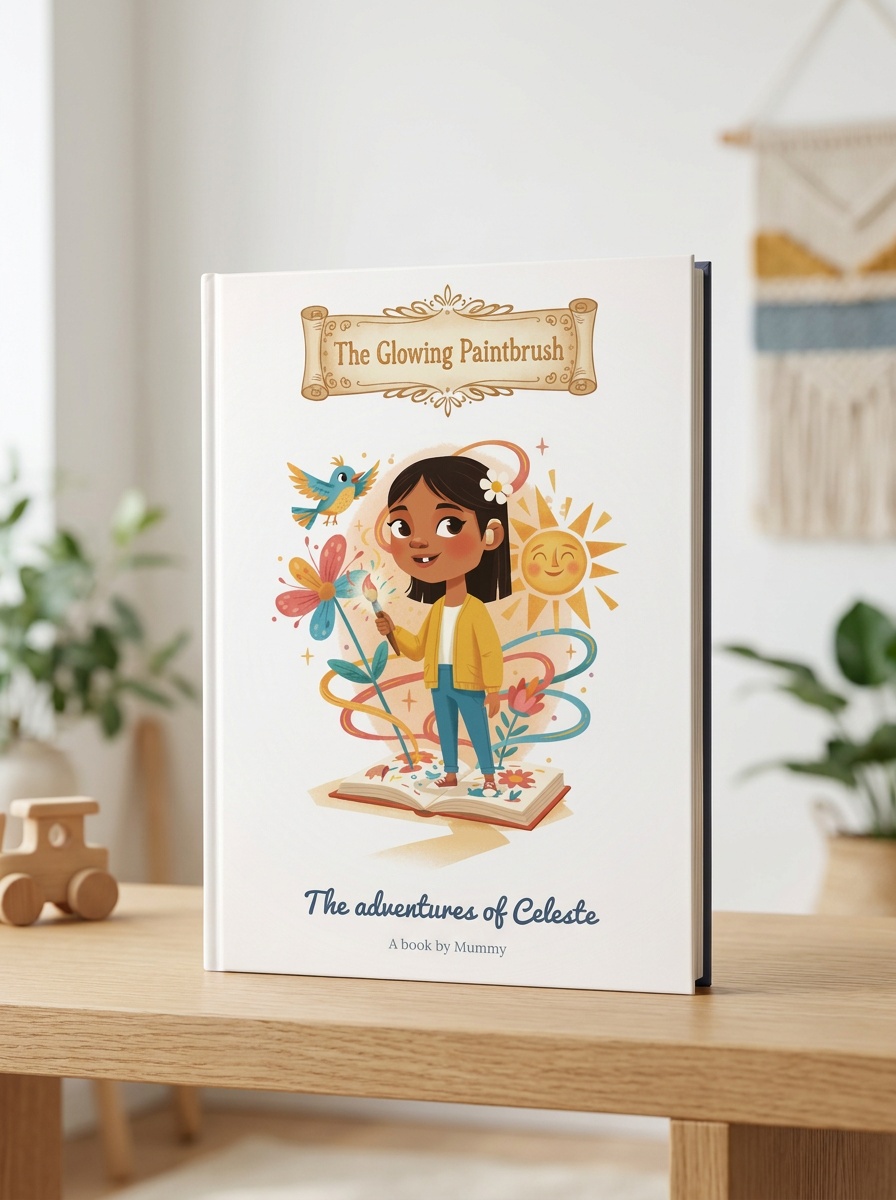
Make a book they will ask for every night
- A new story, written from scratch around them
- Their family, pets and favourite things inside
- Read a free story outline before you pay
- Change any words or pictures until it feels right
32 pages · digital £8.49 · hardback £29.99
An example book. Every title, cover and story is made for one child.
Questions parents ask
What should kids draw when they are bored?
Give them a starting point: their family doing something together, a map of a treasure island, an animal mixed with another animal, or a squiggle to turn into something.
What can a 3 year old draw?
Scribbles, circles, lines and simple faces, often with a story attached. Try scribble hunts, drawing to music and hand tracing, and write down what they tell you about the picture.
What are good drawing ideas for a 10 year old?
A six-box comic strip, drawing real objects from life, a character from several angles, one small thing drawn huge, or designing a trainer or book cover.
How can I help my child get better at drawing?
Show them how to build things from simple shapes, sketch lightly first, and draw the same thing three times. Praise something specific and do not finish their picture for them.
What drawing games can two kids play?
Consequences, the squiggle game, back drawing, describe and draw, and drawing dice all work with two or more players and just paper and pens.