Why colouring is worth it
- Hands: holding a pencil, pressing lightly and staying near a line all build the grip children need for writing.
- Focus: it is one of the few quiet activities that holds a young child for twenty minutes.
- Calm: the steady, repeated movement settles many children after school or before bed.
- Choices: deciding a purple cat is fine is a small act of confidence.
Ages 3 to 4: big shapes, thick lines
- Pages with one large picture and thick outlines: a single animal, a car, a big flower.
- Chunky crayons (triangular ones help grip) and washable felt tips.
- Going over the line is fine at this age. It is how the hand learns.
- Try colouring with something else: dabbing with a sponge, sticker dots, finger paint.
Ages 5 to 6: scenes and stories
- Pictures with a few things in them: a house with a garden, a farm, a rocket in space.
- Colouring pencils as well as felt tips. Show them how to colour in one direction for a smoother finish.
- Colour-by-number and colour-by-letter pages sneak in counting and phonics; see phonics games.
- Ask them to add something of their own: a sun, a pet, themselves.
Ages 7 to 8: detail and patterns
- Busier pages: a map, a busy street, patterned animals, mandalas with big sections.
- Fine felt tips and a decent set of pencils with a sharpener that works.
- Colour-by-sum pages for times tables practice; more in times tables games.
- Dot-to-dots and spot-the-difference pages that they colour afterwards.
Ages 9 to 10: technique and calm
- Detailed patterns and the simpler grown-up colouring books.
- Teach shading: press lightly then harder, and layer two colours to make a third.
- Pick a palette of four colours before starting, and colour the whole page in only those.
- Gel pens or brush pens make a good next step and a good present; see art gifts for kids.
Bright Eyed Kid
A storybook where they star on every page
Written from scratch around your child, with the people and things they love.
Pens, pencils and paper
- Crayons are the easiest start, and chunky ones are hard to break.
- Washable felt tips give bright colour quickly, which young children love. Put the lids on as you go so they last.
- Colouring pencils give control and shading. A few good ones beat a huge set with pale leads.
- Paper: printer paper is fine for crayons and pencils. Felt tips can bleed through, so put a sheet underneath.
Colouring games
- Swap halfway. Two children colour for five minutes, then swap pages and finish each other's.
- Dice colours. Number six colours; roll to choose the next one.
- Opposite day. Every colour has to be surprising: green sky, blue grass, orange elephant.
- Colour hunt. Colour a picture, then go and find something in the house that matches each colour.
- Family page. Everyone colours one section of the same big sheet.
Make your own colouring pages
- Draw a simple outline in thick black pen and let them colour it. They will ask for their own name in bubble letters.
- Older children can draw pages for younger brothers and sisters, which keeps both busy.
- Trace round toys, biscuit cutters or hands to make the shapes.
- Draw a page of zig-zags and loops for them to fill with patterns. More starting points in kids drawing ideas.
Colouring to calm down
- Keep a small tub of pencils and a few pages somewhere easy to reach, as a quiet corner.
- Patterns and mandalas work best, because any colour looks right.
- Colour slowly together for five minutes, breathing in time; more in mindfulness for kids.
- A colouring page and a story make a gentle last half hour before bed.
A book with them on every page
Children who love colouring look closely at pictures, and nothing holds that attention like a picture of themselves. A Bright Eyed Kid book is a new story written around your child, where they star on every page, illustrated in full colour so they can spot their own face, hair and favourite things.
- About them. You answer three short questions about your child and can add a story idea of your own.
- Family alongside. Up to five co-stars, each with a photo and a name.
- Drawn so they recognise themselves, in one of four picture styles: Playful, Standard, Quirky or Classic.
- Right for their age. The writing changes for every age from 3 to 10.
- You check it first. Read a free story outline before you pay, then change any words or pictures until it feels right.
What it costs
A digital book is £8.49 and a printed hardback is £29.99, plus £2.95 delivery. Every book is 32 pages.
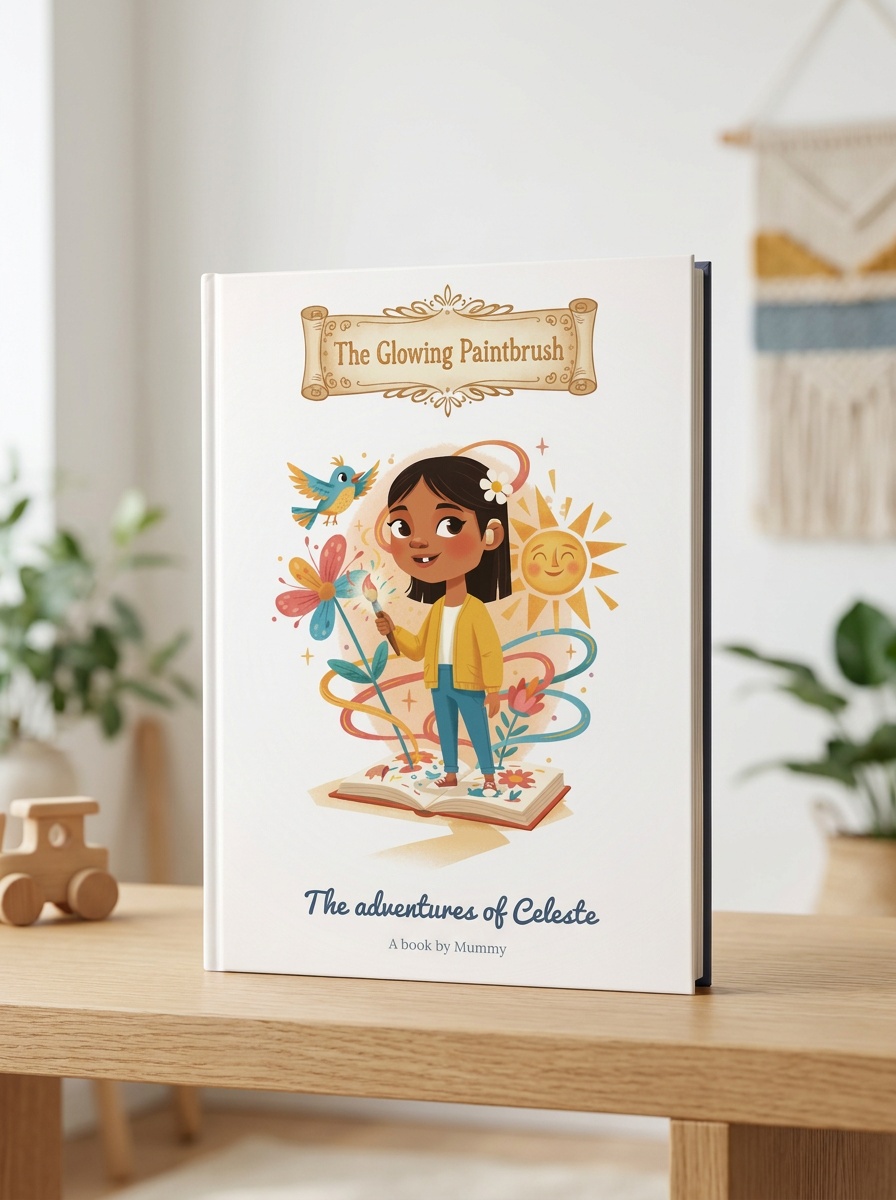
Make a book they will ask for every night
- A new story, written from scratch around them
- Their family, pets and favourite things inside
- Read a free story outline before you pay
- Change any words or pictures until it feels right
32 pages · digital £8.49 · hardback £29.99
An example book. Every title, cover and story is made for one child.
Questions parents ask
What age can children start colouring?
Most start making marks with chunky crayons from around two, and enjoy simple colouring pages with big shapes and thick outlines from about three.
Is colouring good for kids?
Yes. It builds the hand control and grip needed for writing, holds their focus and helps many children calm down.
What should a 5 year old use for colouring?
Washable felt tips and colouring pencils, on pages with a simple scene. Show them how to colour in one direction for a smoother finish.
How do I help my child colour inside the lines?
Leave it until about five. After that, show them how to go slowly round the edge first and then fill in the middle, and choose pages with thicker outlines.
What are some colouring games for kids?
Swap pages halfway, roll a dice to pick colours, colour everything a surprising colour, or hunt the house for things that match each colour.