Why poems work at Christmas
Christmas is already full of rhyme: carols, cracker verses, songs at the nativity. Children hear the music of words before they understand all of them, and a short poem gives them something to say aloud with pride. Learning one by heart is also a present that costs nothing, which grandparents tend to love more than anything from a shop.
Well-loved Christmas poems by age
Ages 3 to 5
- Carols as poems. Away in a Manger and Jingle Bells are poems they may already know as songs. Say them slowly without the tune.
- Short rhymes with actions. Counting rhymes about snowmen, robins and presents, with fingers for each number.
- Picture book rhymes. Many Christmas picture books are written in verse, and reading them aloud counts.
Ages 5 to 7
- A Visit from St. Nicholas, usually credited to Clement Clarke Moore and often called The Night Before Christmas. Read it aloud and let them join in with the reindeer names.
- Good King Wenceslas by John Mason Neale, a carol that tells a whole story of kindness in the snow.
- Funny poems. Children this age love a silly ending, so look for collections of funny Christmas verse at the library.
Ages 7 to 9
- In the Bleak Midwinter by Christina Rossetti. Talk about the picture each verse paints.
- Talking Turkeys!! by Benjamin Zephaniah, a funny, bouncy poem told from the turkey's side. Great for reading aloud.
- Christmas Thank You's by Mick Gowar, about writing thank-you letters for presents you did not want. Children recognise it at once.
- The carol of the field mice in The Wind in the Willows by Kenneth Grahame, sung by mice at Mole's door.
Ages 9 and 10
- The Oxen by Thomas Hardy, a short poem about an old Christmas Eve belief and wanting to believe it.
- Christmas Bells by Henry Wadsworth Longfellow, written in wartime, about hope.
- Christmas at Sea by Robert Louis Stevenson, a sailor's Christmas Day within sight of home.
- Ring Out, Wild Bells by Alfred, Lord Tennyson, for the turn of the New Year.
Project Gutenberg has a free old collection called Fifty Christmas Poems for Children, and your local library will have modern anthologies for every age.
Learn one by heart
- Pick a short one, or a single verse of a long one. Four lines is plenty for a five year old.
- Learn one line a day, saying it at breakfast and at bedtime. Add a new line only when the last one is solid.
- Do actions for the hard lines: a sleigh, a falling star, a shiver.
- Write it on a card and stick it on the fridge.
- Record them saying it on a phone, then play it back. They love hearing themselves.
- Perform it on Christmas Day for grandparents, as a present.
Write their own
Children often write better poems than they expect when they have a simple shape to fill. Try one of these.
- Name poem: each letter of their name starts a Christmas line. S is for snow on the shed roof.
- 'Christmas is' list: every line starts 'Christmas is' and ends with something they love: the smell of oranges, Gran's laugh, the dog in a paper hat.
- Five senses poem: one line each for what they see, hear, smell, taste and touch at Christmas.
- Two-line rhyme: a funny couplet for a cracker or a gift tag.
Here are three short verses we wrote to show how simple it can be:
Our tree is wonky, our star is bent, / the lights have a mind of their own. / But every year it is perfect, because / it is ours, and we're all at home.
Robin on the frosty gate, / fluffed up like a ball, / I put out crumbs. You came to eat. / Best present of them all.
I wrapped a box for Grandad. / I wrapped it nice and tight. / I used a whole roll of sellotape. / Good luck to him tonight.
Bright Eyed Kid
A storybook where they star on every page
Written from scratch around your child, with the people and things they love.
Reading poems aloud
- Read slowly and enjoy the rhymes. Children hear them before they understand the words.
- Read it twice: once for the sound, once to talk about it.
- Ask one question: which line did you like best? What picture did you see?
- Let them read a line back to you in a funny voice: a robot, a giant, a sleepy reindeer.
Ways to use poems at Christmas
- A poem advent: one short poem a day in December, read at breakfast.
- Inside a card: copy out a favourite verse, or their own, for a grandparent.
- A framed keepsake: write their own poem out neatly and put the year on the back.
- At the table: a child reads a short poem before Christmas dinner.
Songs and stories work the same way: see our guides to Christmas songs for kids and Christmas stories for kids.
Why a Christmas story where they star fits
A child who has just written a poem about their own Christmas, their tree, their robin and their grandad, already knows that the best stories are the ones about their own lives. A book where they star takes that one step further, with them on every page of a Christmas adventure.
A Bright Eyed Kid book is written for the age you choose, from bouncy read-aloud lines for little ones to richer language for older children. Add a story idea, such as a snowy Christmas Eve adventure, and up to five co-stars like a grandparent, a sibling or the family pet. You see a free story outline before paying and can change it until it feels right.
What it costs
A digital book is £8.49 and a printed hardback is £29.99, plus £2.95 delivery. Every book is 32 pages.
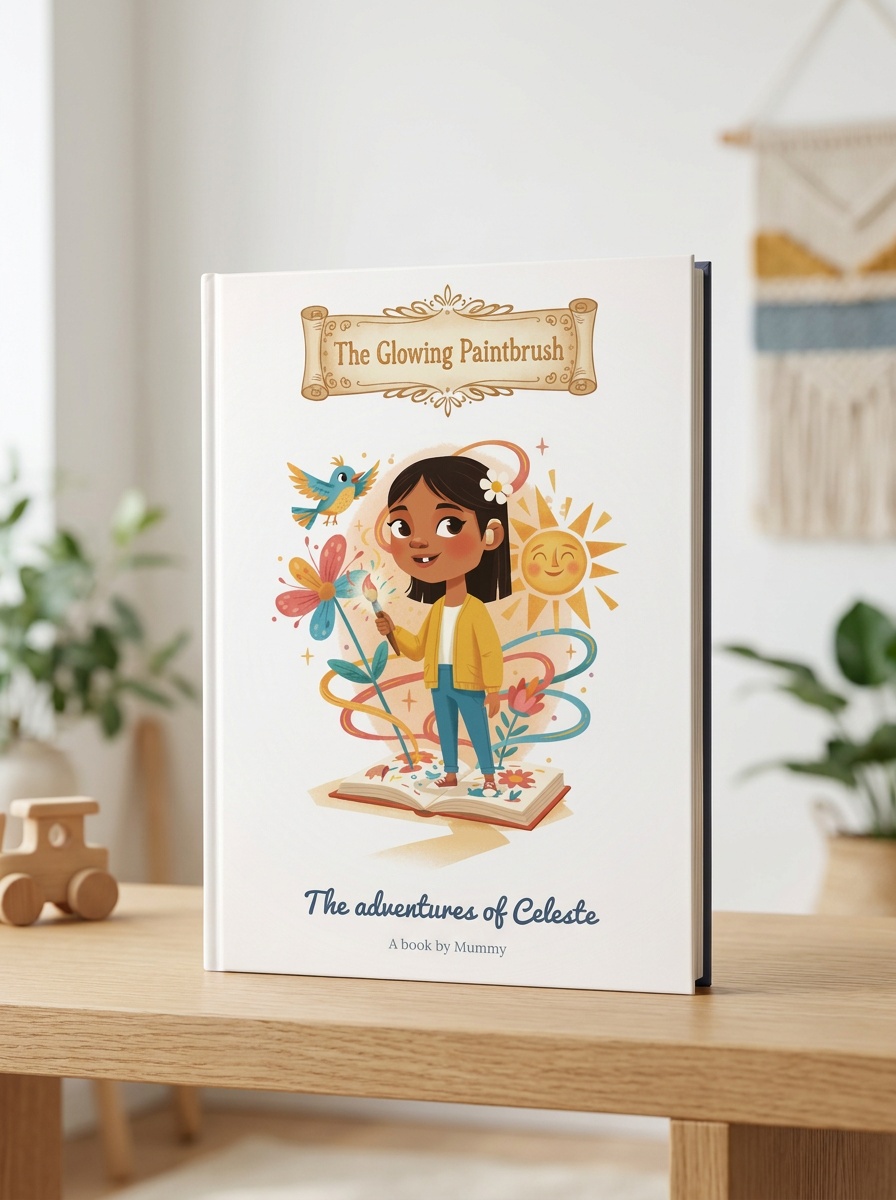
Make a book they will ask for every night
- A new story, written from scratch around them
- Their family, pets and favourite things inside
- Read a free story outline before you pay
- Change any words or pictures until it feels right
32 pages · digital £8.49 · hardback £29.99
An example book. Every title, cover and story is made for one child.
Questions parents ask
What is a good Christmas poem for a child to learn?
Pick something short, such as a verse of Away in a Manger or In the Bleak Midwinter, or the opening lines of A Visit from St. Nicholas. Four lines is plenty for a younger child.
Who wrote The Night Before Christmas?
The poem, properly called A Visit from St. Nicholas, is usually credited to Clement Clarke Moore. It was first published in 1823.
What is a funny Christmas poem for kids?
Talking Turkeys!! by Benjamin Zephaniah and Christmas Thank You's by Mick Gowar are both funny, well-loved poems that children enjoy reading aloud.
How can a child learn a poem by heart?
One line a day, said at breakfast and bedtime, with actions for the hard lines. Recording them saying it and playing it back helps too.
How can kids write their own Christmas poem?
Give them a simple shape: a name poem, a 'Christmas is' list, or a five senses poem with one line for each sense.