Five minutes before lights out
- The Night Before Christmas by Clement Clarke Moore. A poem that takes a few minutes aloud, and children join in by the second year.
- The Snowman by Raymond Briggs. No words at all, so you tell it from the pictures in your own voice. Lovely for children who like to do the telling.
- Father Christmas by Raymond Briggs. A grumpy, very British Father Christmas going about his rounds, told in comic strip panels.
- The nativity, told simply, for families who keep Christmas that way.
Fifteen minutes on the sofa
- The Jolly Christmas Postman by Janet and Allan Ahlberg. Real letters to pull out of the envelopes, and fairy-tale characters on every page.
- Stick Man by Julia Donaldson and Axel Scheffler. A long journey home that ends on Christmas Eve.
- The Polar Express by Chris Van Allsburg. A train to the North Pole and a quiet, magical ending.
- How the Grinch Stole Christmas! by Dr. Seuss. Rhyming, funny and great to read in silly voices.
Old tales to tell from memory
Told stories feel different from read ones. You watch their face instead of the page. These are old enough to retell in your own words:
- The Elves and the Shoemaker. A poor shoemaker, two tiny helpers in the night, and a kindness returned. Good from age 3.
- The Nutcracker. A toy that comes alive on Christmas Eve and a battle with the Mouse King. From age 5.
- The Fir Tree by Hans Christian Andersen. A small tree desperate to grow up. Gentle and a little sad, so best from age 7.
How to tell a story without a book
- Learn the shape, not the words: the start, three things that happen, and the end.
- Pause before the big moment. Children lean in.
- Give each character a voice or a small gesture.
- Turn the big light off and keep a lamp or fairy lights on.
A chapter a night through December
- Ages 6 to 8: The Christmasaurus by Tom Fletcher, read across a couple of weeks.
- Ages 8 to 10: A Boy Called Christmas by Matt Haig, or a children's edition of A Christmas Carol by Charles Dickens.
- Any book with short chapters works: one a night from 1 December, finishing on Christmas Eve. Pair it with a book advent calendar if you like.
Make one up together
Children love a story with themselves in it. Here is a simple recipe that works at any age:
- Who: your child, plus one helper. An elf, a robin, a reindeer who is new to the job, or the dog.
- Where: somewhere real. Their bedroom, the park at the end of the road, Grandad's shed.
- Problem: something goes wrong on Christmas Eve. The sleigh will not start. The presents have gone to the wrong houses. Father Christmas has a cold.
- Three tries: two fail, and the third works because of something your child is good at.
- Home: back in bed just before the sleigh lands on the roof.
Take turns adding a line, and let them overrule you. Write it down afterwards: it will be asked for again.
Story starters to try
- One snowflake did not want to land.
- The smallest elf was given the most important job.
- Every year, something odd happens to the cat on Christmas Eve.
- Father Christmas left a note: help.
Bright Eyed Kid
A storybook where they star on every page
Written from scratch around your child, with the people and things they love.
Turn the story into something to keep
- Illustrate it. Fold a few sheets of paper into a little booklet, write one line per page, and let your child draw the pictures.
- Record it. Use a phone to record your child telling their Christmas story, and play it back next December.
- Send it to a grandparent. A story posted in a Christmas card is a gift on its own.
- Act it out. Cousins and siblings make a cast, and the grown-ups are the audience after Christmas lunch.
Stories with a message
Christmas stories are a gentle way to talk about bigger ideas without a lecture. The Elves and the Shoemaker is about kindness returned. A Christmas Carol is about changing your ways. The Grinch is about what Christmas is really for. After the story, ask one easy question, such as what they would have done, and let the conversation go where it goes.
By age
- Ages 3 to 5: short, repeated, with a part they can say along. The same story every night is a good thing.
- Ages 6 to 8: a bit of danger, a bit of magic and a happy ending. They will start adding twists to your made-up stories.
- Ages 9 to 10: longer stories, the older tales, and letting them tell one to a younger child.
For poems to read alongside, see our guide to Christmas poems for kids. For more book lists, see Christmas books for kids.
Why their own Christmas story works so well
The stories children ask for again and again are the ones where they are in the middle of it. A Bright Eyed Kid book turns that into a finished, illustrated story, with your child starring on every page and looking like themselves. Give the story you made up together as your idea, the elf with the cold or the snowflake that would not land, and the book is written around it.
The writing changes with the age you choose, so a three year old gets bouncy read-aloud lines and a ten year old gets a layered plot. Family and pets can be co-stars. The outline is free to read first, and the book is usually ready within the hour.
What it costs
A digital book is £8.49 and a printed hardback is £29.99, plus £2.95 delivery. Every book is 32 pages.
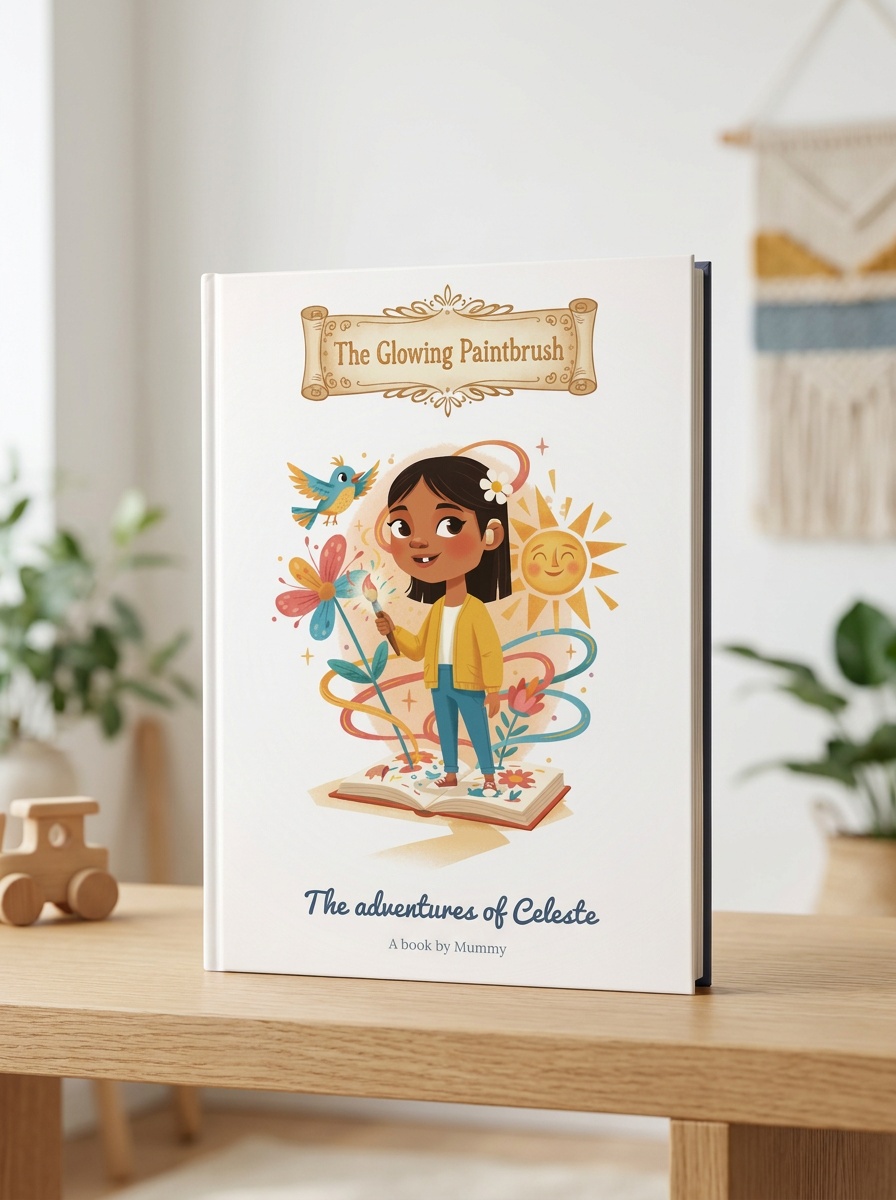
Make a book they will ask for every night
- A new story, written from scratch around them
- Their family, pets and favourite things inside
- Read a free story outline before you pay
- Change any words or pictures until it feels right
32 pages · digital £8.49 · hardback £29.99
An example book. Every title, cover and story is made for one child.
Questions parents ask
What is a good short Christmas story for kids?
The Night Before Christmas is a poem that takes a few minutes to read aloud. The Elves and the Shoemaker is easy to tell from memory.
What Christmas stories suit older children?
A Boy Called Christmas by Matt Haig, a children's edition of A Christmas Carol, The Nutcracker, or The Fir Tree by Hans Christian Andersen.
How do we make up a Christmas story together?
Put your child in it with one helper, give them a Christmas Eve problem, let two tries fail and the third work, and get them home before Santa comes.
How can I tell a story without a book?
Learn the shape rather than the words, give characters voices, pause before the big moment, and dim the lights.
Can our made-up story become a Bright Eyed Kid book?
Yes. Give it as your own story idea and the book is written around it, with your child starring on every page.