Knock knock jokes
The best first joke for children aged 3 to 5, because the pattern does the work. Once they know it, they will invent their own, and those make no sense at all, which is half the fun.
- Knock knock. Who's there? Boo. Boo who? Don't cry, it's only a joke.
- Knock knock. Who's there? Cow says. Cow says who? No, a cow says moo!
- Knock knock. Who's there? Banana. Banana who? (Repeat three times, then:) Knock knock. Who's there? Orange. Orange who? Orange you glad I didn't say banana?
- Knock knock. Who's there? Interrupting cow. Interrupting c... MOO!
- Knock knock. Who's there? Tank. Tank who? You're welcome.
Animal jokes
Animals are the easiest way in for 4 to 7 year olds: they know the animal, so they only have to follow the twist.
- What do you call a sleeping dinosaur? A dino-snore.
- Why do fish live in salt water? Because pepper makes them sneeze.
- What do you call a bear with no teeth? A gummy bear.
- How do bees get to school? On the school buzz.
- What do you call a pig that does karate? A pork chop.
- Why are frogs so happy? They eat whatever bugs them.
Food jokes for the dinner table
- Why did the banana go to the doctor? It wasn't peeling well.
- What do you call cheese that isn't yours? Nacho cheese.
- Why did the tomato go red? It saw the salad dressing.
- What did one plate say to the other plate? Lunch is on me.
- Why did the biscuit go to the doctor? It felt crummy.
Silly questions and school jokes
From about six, children start to get puns, and the groan becomes part of the laugh.
- Why did the maths book look sad? It had too many problems.
- What is a teacher's favourite nation? Expla-nation.
- Why did the pencil go to sleep? It was too tired to write.
- What has more letters than the alphabet? The post office.
- Why can't a nose be twelve inches long? Because then it would be a foot.
Riddles for 7 to 10 year olds
Riddles suit older children who like to win. Give them time to think before the answer.
- What has hands but cannot clap? A clock.
- What gets wetter the more it dries? A towel.
- What has a neck but no head? A bottle.
- What can you catch but not throw? A cold.
- The more you take, the more you leave behind. What are they? Footsteps.
- What goes up but never comes down? Your age.

Bright Eyed Kid
A storybook where they star on every page
Written from scratch around your child, with the people and things they love.
Tongue twisters
Not jokes exactly, but they get the same laughs. Say each one three times fast.
- Red lorry, yellow lorry.
- Six slippery snails slid slowly seaward.
- Fred fed Ted bread, and Ted fed Fred bread.
- Toy boat. (Harder than it looks.)
Where to use them
- A lunchbox note. Write the question on the front of a folded note and the answer inside. Something to share at lunch.
- The car or the walk to school. Take turns: one joke each, and the driver judges.
- A joke jar. Write jokes on strips of paper, fold them into a jar, and pull one out at tea every night. Children add their own as they hear them.
- Bedtime. One joke after the story is a happy way to end the day.
- A family joke book. A cheap notebook where everyone writes the best joke they heard that week, with their name and the date. In a year it is a record of what made your family laugh.
How to help them tell a joke
- Learn one, not ten. A child who knows one joke perfectly gets a bigger laugh than one who half-remembers ten.
- Practise the pause. Ask the question, wait, then give the answer slowly.
- Laugh at the made-up ones too. A four year old's joke about a sock and a sandwich is still a joke to them.
Write your own joke
Most children's jokes follow one recipe, and children aged 7 and up can use it:
- Pick a thing they know well: a pet, a football, a favourite food.
- List words about it. For a cat: purr, paw, whiskers, kitten, mouse.
- Find a word that sounds like another word. Paw sounds like poor, purr sounds like per.
- Build a question where that word is the answer. "Why did the cat stop playing cards? It had a paw hand."
It will not always work, and the misses are often funnier than the hits.
A story with their sense of humour
A child who loves jokes will love a book that is as silly as they are. A Bright Eyed Kid book is a new story written around your child, where they star on every page.
- Their humour in it. You answer three short questions about your child, so you can tell us they love jokes, pranks or silly voices, and add a story idea of your own.
- The family can join in. Up to five co-stars, each with a photo and a name, so the sibling who groans at every joke can be in it too.
- Drawn so they recognise themselves, in one of four picture styles: Playful, Standard, Quirky or Classic.
- Right for their age. The writing changes for every age from 3 to 10.
- You check it first. Read a free story outline before you pay, then change any words or pictures until it feels right.
More fun in Christmas jokes for kids, kids party games and rainy day activities for kids.
What it costs
A digital book is £8.49 and a printed hardback is £29.99, plus £2.95 delivery. Every book is 32 pages.
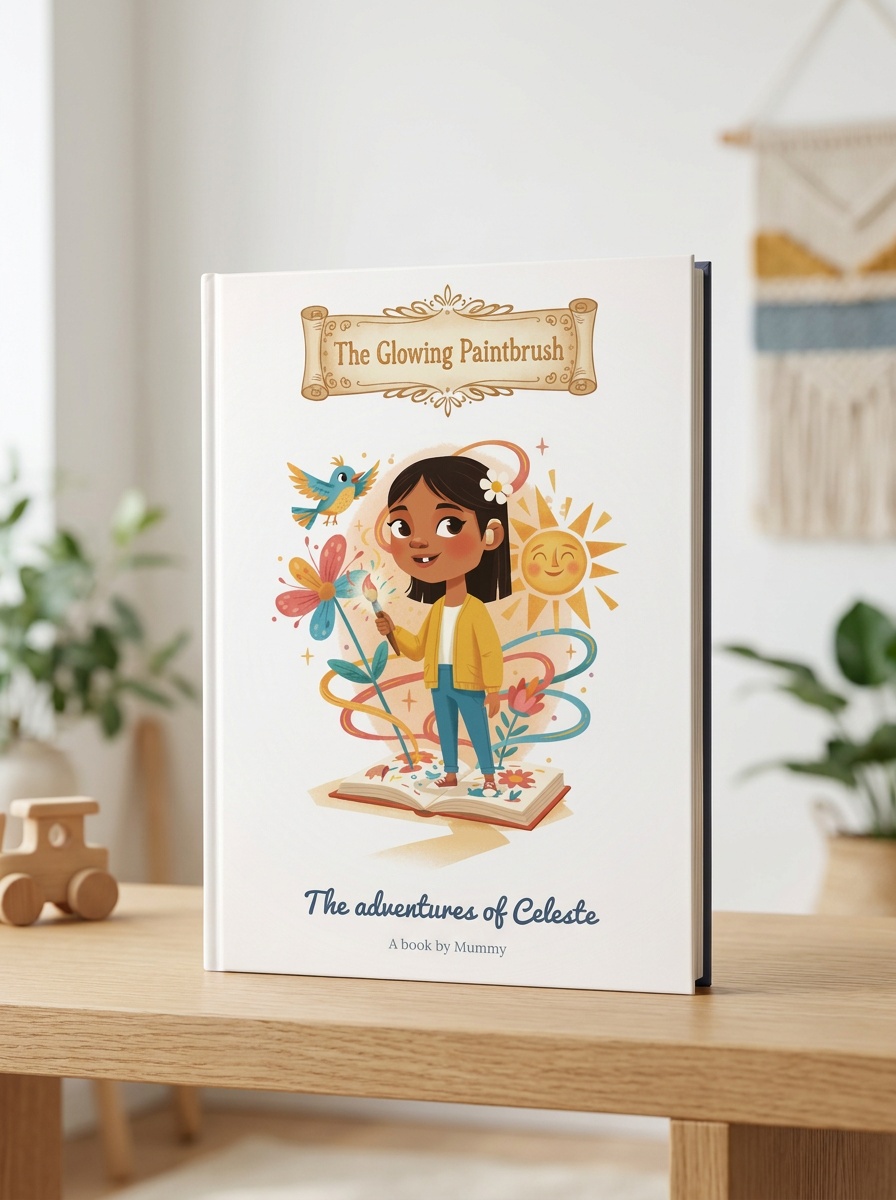
Make a book they will ask for every night
- A new story, written from scratch around them
- Their family, pets and favourite things inside
- Read a free story outline before you pay
- Change any words or pictures until it feels right
32 pages · digital £8.49 · hardback £29.99
An example book. Every title, cover and story is made for one child.
Questions parents ask
What is the best first joke for a young child?
A knock knock joke. The pattern is easy to learn, so children aged 3 to 5 can tell one back, and they soon start making up their own.
At what age do children understand jokes?
Most children laugh at silly sounds and things in the wrong place from toddlerhood. Simple jokes with a pattern land around 4 to 5, and puns usually start to work from about 6 or 7.
How can I help my child remember a joke?
Learn one joke at a time, practise it a few times, and teach them to pause before the answer. A joke jar or family joke book helps them keep the ones they like.
How do kids write their own jokes?
Pick a thing they know, list words about it, find one that sounds like another word, and build a question with that word as the answer.
Can a Bright Eyed Kid book be funny?
Yes. You answer three questions about your child, so you can tell us they love jokes or silly voices, and you can add a story idea of your own.