What schools in England expect

- Reception (ages 4 to 5): holding a pencil well and writing most letters the right way round, starting in the right place.
- Year 1 (ages 5 to 6): forming lower-case letters correctly, plus capitals and the digits 0 to 9.
- Year 2 (ages 6 to 7): letters the right size, and starting the strokes needed to join.
- Years 3 to 6 (ages 7 to 11): joined writing that gets quicker and easier to read.
Schools teach different styles, some joining from the start and some later. Ask for a copy of the letter shapes your child's school uses, so you practise the same ones.
Ages 3 to 4: strong hands first
Control of a pencil comes from the shoulder down to the fingertips. Big movements first, small ones after.
- Big shapes. Paint with water on a fence or wall, chalk huge circles on the path, draw zigzags in the air with a ribbon.
- Busy fingers. Squash and roll playdough, peg washing on a line, pick up pasta with tongs, tear paper for a collage.
- Lying on the tummy to draw or do a puzzle builds the shoulders that steady a hand.
- Short crayons and chalk. Little pieces make fingers grip the right way without being told.
Holding the pencil
- The tripod grip: pencil held between the thumb and first finger, resting on the middle finger.
- Pinch and flip. Pencil on the table, point towards them. They pinch it near the point with thumb and finger, then flip it back into place.
- Triangular pencils or a soft grip help small hands find the spot.
- Leave a grip that works and does not hurt. If writing is slow or painful by Year 2, mention it to the teacher.
Reception and Year 1: letters in shape families
Most letters are made from a few moves. Practise them in families, not from a to z.
- Round letters: c, a, d, g, o, q, e, s and f all start with the same curl over the top, like the start of a c.
- Long ladder letters: l, i, t, j, u and y start with a stroke straight down.
- Bouncing letters: r, n, m, h, b and p go down, then back up and over.
- Zigzag letters: v, w, x, z and k use straight slanting lines.
- Start in the right place. This matters more than neatness: a letter started at the bottom is hard to join later.
- Big before small. Trace letters in a tray of flour, sand or shaving foam, then with a finger on their back, then on paper.
- Three good ones. Ask for three of a letter, then let them circle their best. A whole row tires small hands.
- Their name first. It is the word they most want to write: a capital at the start, lower case after.
Year 2 onwards: joining up
- Joins in pairs. Practise common pairs like "in", "an", "th", "ll" and "ee" before whole words.
- Same size. Lined paper with a middle line helps letters sit evenly: tall letters reach up, tails hang down.
- Short and often. Five minutes copying a joke or a line from a song beats a page of letters.
- Speed comes last. By Years 5 and 6, children write faster and choose when to join. Reading their own notes back is the goal.

Bright Eyed Kid
A storybook where they star on every page
Written from scratch around your child, with the people and things they love.
Left-handed children
- Tilt the paper clockwise, top corner to the right, so they can see what they write.
- Hold the pencil a little higher up, so the hand does not hide the writing.
- Light from the right, so the hand does not cast a shadow over the page.
- Sit on the left of a right-handed child so elbows do not bump.
- Pencils that do not smudge, and the paper a little to the left of the body.
Real reasons to write
Children practise far more when the writing is for something.
- The shopping list. They write it, then tick it off in the shop.
- Letters and cards. A thank-you card for a birthday present, a postcard to a grandparent, a note for the tooth fairy (see tooth fairy letters).
- Labels and signs. "Keep out", "Shop open", names on their drawings.
- A notebook of their own for lists, secrets and stories, with no marking ever.
Keep it happy
- Praise one thing. "That g has a lovely tail" helps more than "neater, please".
- Stop before they are tired. Wobbly letters mean the hand needs a rest.
- A sticker a day works for some children; see reward charts for kids.
A story to write about
Children write best about what they love, and they love stories about themselves. A Bright Eyed Kid book is a new story written around your child, where they star on every page. It makes a great spark for writing: a next chapter of their own, or a letter to someone in the story.
- About them. You answer three short questions about your child and can add a story idea of your own.
- Family alongside. Up to five co-stars, each with a photo and a name.
- Drawn so they recognise themselves, in one of four picture styles: Playful, Standard, Quirky or Classic.
- Right for their age. The writing changes for every age from 3 to 10.
- You check it first. Read a free story outline before you pay, then change any words or pictures until it feels right.
More ideas in phonics games and spelling games for kids.
What it costs
A digital book is £8.49 and a printed hardback is £29.99, plus £2.95 delivery. Every book is 32 pages.
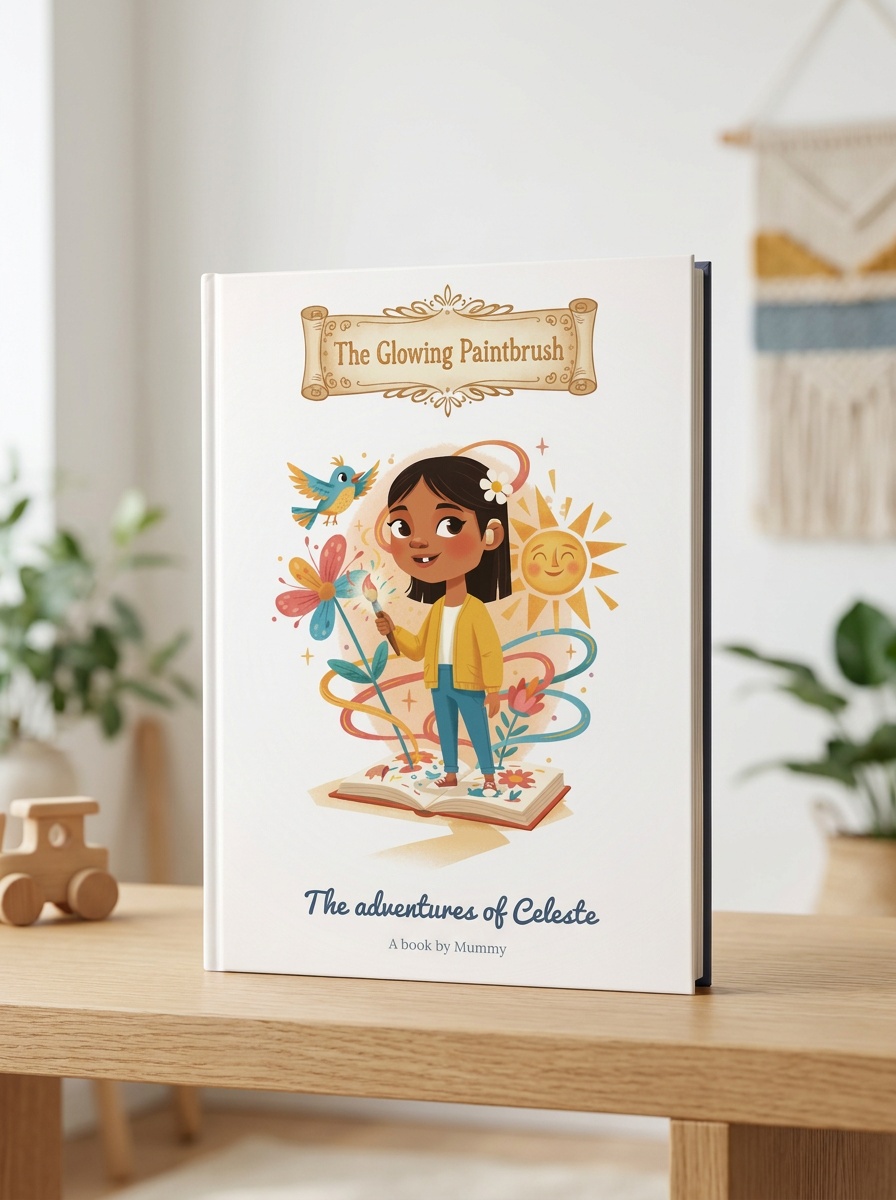
Make a book they will ask for every night
- A new story, written from scratch around them
- Their family, pets and favourite things inside
- Read a free story outline before you pay
- Change any words or pictures until it feels right
32 pages · digital £8.49 · hardback £29.99
An example book. Every title, cover and story is made for one child.
Questions parents ask
How can I help my child with handwriting at home?
Build hand strength with playdough, pegs and chalk, practise letters in shape families starting in the right place, keep sessions to a few minutes, and give them real things to write like shopping lists and cards.
When do children start joined-up handwriting?
Schools in England teach the strokes needed to join in Year 2, and children build up joined writing through Years 3 to 6. Some schools teach joining from the start, so check your school's style.
What is the right way to hold a pencil?
The tripod grip: the pencil between the thumb and first finger, resting on the middle finger. Short crayons and triangular pencils help small hands find it.
How can I help a left-handed child write?
Tilt the paper clockwise, hold the pencil a little higher up, have the light on the right, sit them on the left of a right-handed child, and use pencils that do not smudge.
How long should handwriting practice be?
About five minutes for young children. Ask for three good letters rather than a whole row, and stop when the letters get wobbly.